In today’s fast-paced business world, managing finances efficiently is the key to long-term success. One of the most essential components of financial management is bookkeeping. But what exactly is included in bookkeeping services, and how can businesses stay compliant while maximizing profitability?
This guide breaks down the core elements of bookkeeping services, highlights common challenges businesses face, and explains how White Label Accounting helps solve them to enhance compliance and drive profitability.
At its core, bookkeeping is the process of recording, organizing, and managing financial transactions. It forms the foundation for all other accounting functions. Proper bookkeeping ensures financial information is accurate, up to date, and compliant with all regulatory requirements.
1. Transaction Recording
Every financial activity — from sales and purchases to expenses — must be recorded accurately. Professional bookkeepers use reliable accounting software to organize and categorize transactions systematically.
2. Accounts Payable and Receivable Management
Managing what your business owes (accounts payable) and what customers owe you (accounts receivable) is essential for maintaining healthy cash flow.
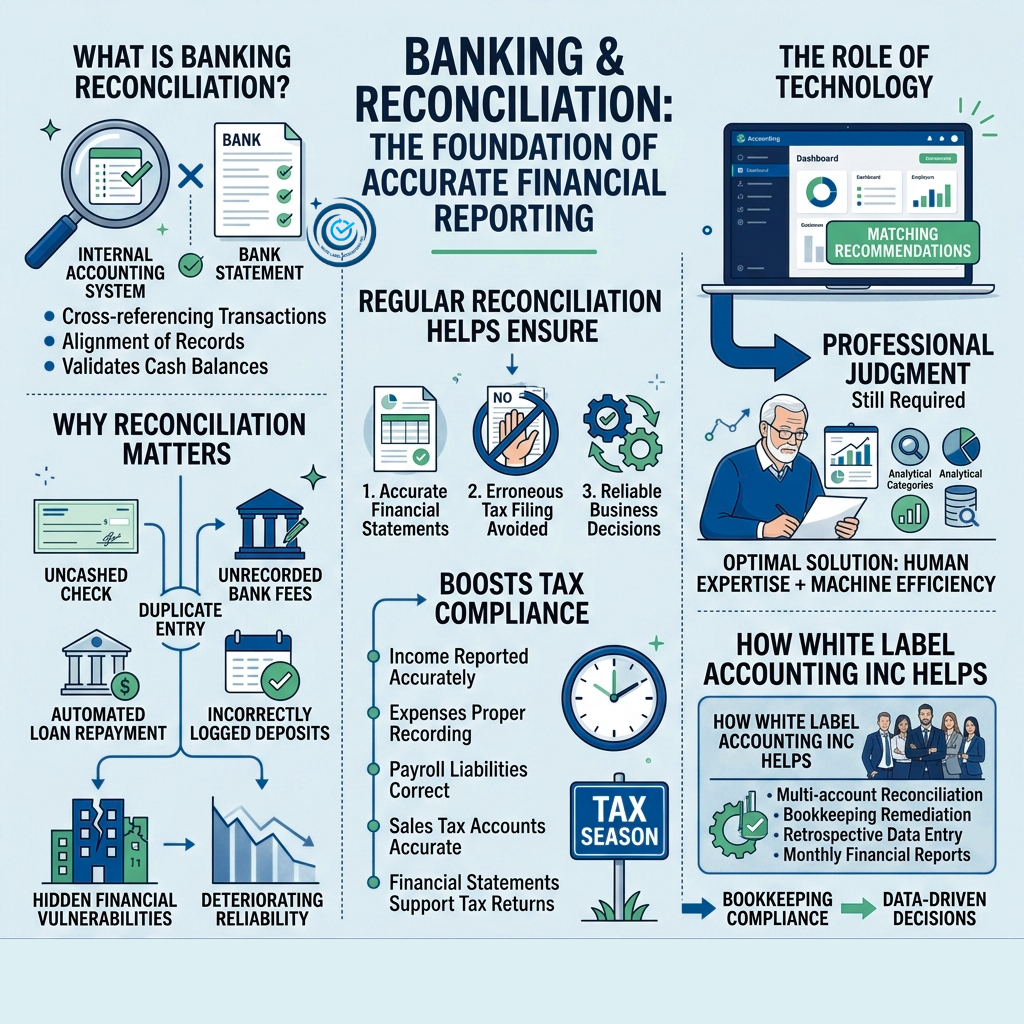
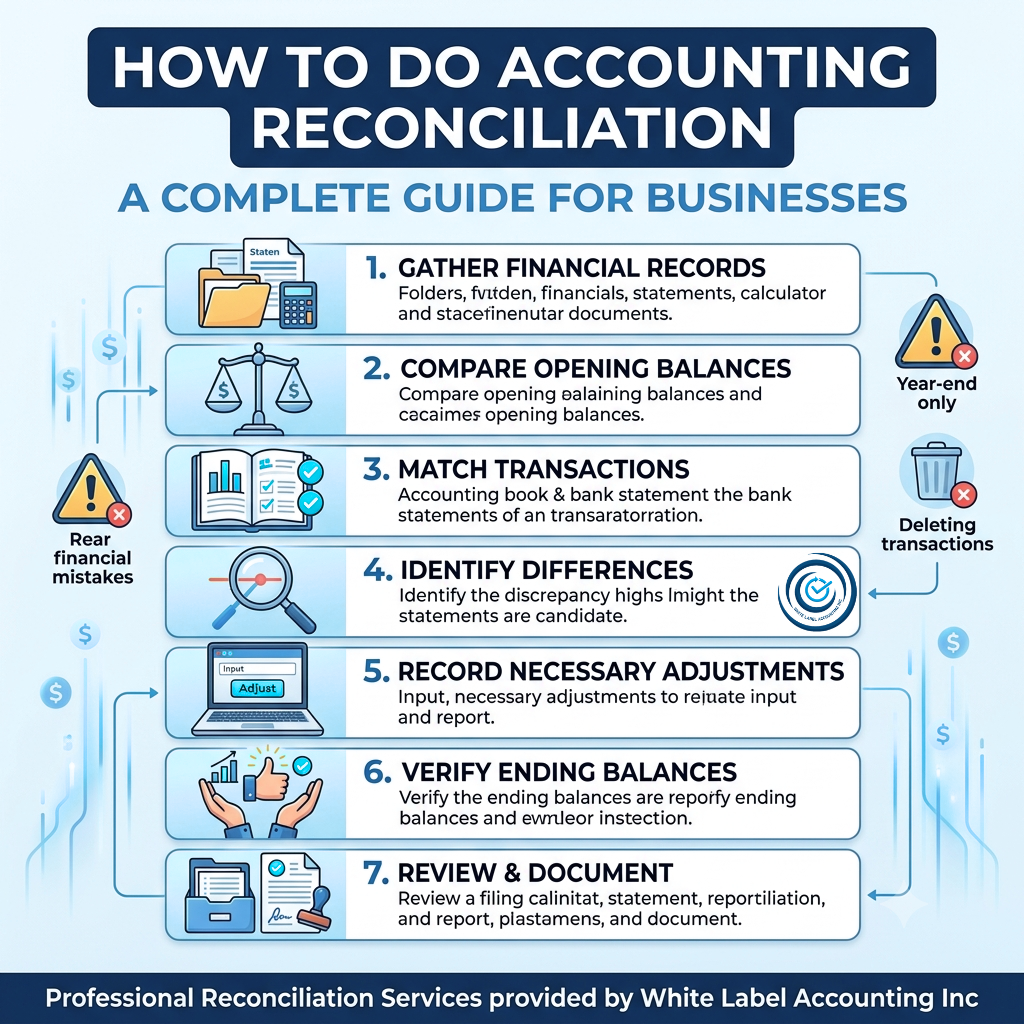
3. Bank Reconciliation
Bookkeepers match your bank statements with your financial records to detect errors, omissions, or potential fraudulent activities early.
4. Financial Reporting
Accurate and timely financial reports — such as income statements, balance sheets, and cash flow statements — provide insights that support better business decisions.
5. Payroll Processing
From calculating salaries to handling taxes and benefits, professional bookkeeping services ensure payroll is processed correctly and on schedule.
6. Tax Preparation and Compliance
Keeping financial records organized makes tax filing seamless. Bookkeepers help your business stay compliant with tax laws, minimizing risks of errors or penalties.
7. Expense Tracking and Budgeting
Tracking expenses and creating budgets help control spending and ensure the business remains financially healthy.
Even with the best intentions, many small and medium-sized businesses struggle with bookkeeping challenges that affect growth and compliance:
Inaccurate Records: Misrecorded transactions can distort financial reports and impact decision-making.
Cash Flow Problems: Without proper tracking, businesses may experience payment delays or liquidity issues.
Non-Compliance: Poor recordkeeping can result in tax penalties or audits.
Time Constraints: Managing bookkeeping manually can consume valuable time that could be spent growing the business.
At White Label Accounting, we deliver comprehensive bookkeeping solutions customized to your business needs. Here’s how we address common issues:
Automated Transaction Recording: Using advanced accounting technology, we record and update transactions in real time for accuracy and efficiency.
Cash Flow Management: Our team monitors and manages your cash flow to ensure funds are available when needed.
Tax Compliance: We help maintain full compliance with tax regulations, minimizing the risk of penalties or audits.
Customized Financial Reporting: Receive tailored financial reports that provide actionable insights into your business performance.
Accurate bookkeeping isn’t just about meeting regulatory requirements — it’s a strategic advantage for your business.
Informed Decision-Making: Reliable financial data enables better budgeting, investment planning, and cost control.
Improved Cash Flow: Efficient receivables and payables management ensures smooth operations and financial stability.
Reduced Penalty Risks: Compliance-focused bookkeeping helps you avoid costly tax errors and legal issues.
At White Label Accounting, we take pride in offering professional bookkeeping services that ensure both compliance and profitability. Our expert team leverages cutting-edge accounting tools to deliver accurate, real-time financial data.





Copyright © 2025 White Label Accounting Inc. All Rights Reserved | Developed by WITH U Technology Pvt. Ltd.