Many owners of micro, small, and medium-sized enterprises (MSMEs) only focus on sales, marketing, and daily operational matters when running their businesses, and commonly overlook the critical accounting process of bank reconciliation. Even enterprises with extremely strong profitability can fall into financial chaos if their bank records do not align with their accounting records. Bank management and reconciliation must be advanced in tandem, to cover all capital changes that affect a company’s financial status. Neglecting regular reconciliation can also trigger three types of problems: inaccurate financial statements, erroneous tax filing, and flawed bases for business decision-making.
Regardless of whether you manage a startup, a small business, or an expanding enterprise, comprehending bank reconciliation is essential. This practice ensures financial accuracy and prevents errors that could result in substantial financial losses.
What Is Bank Reconciliation
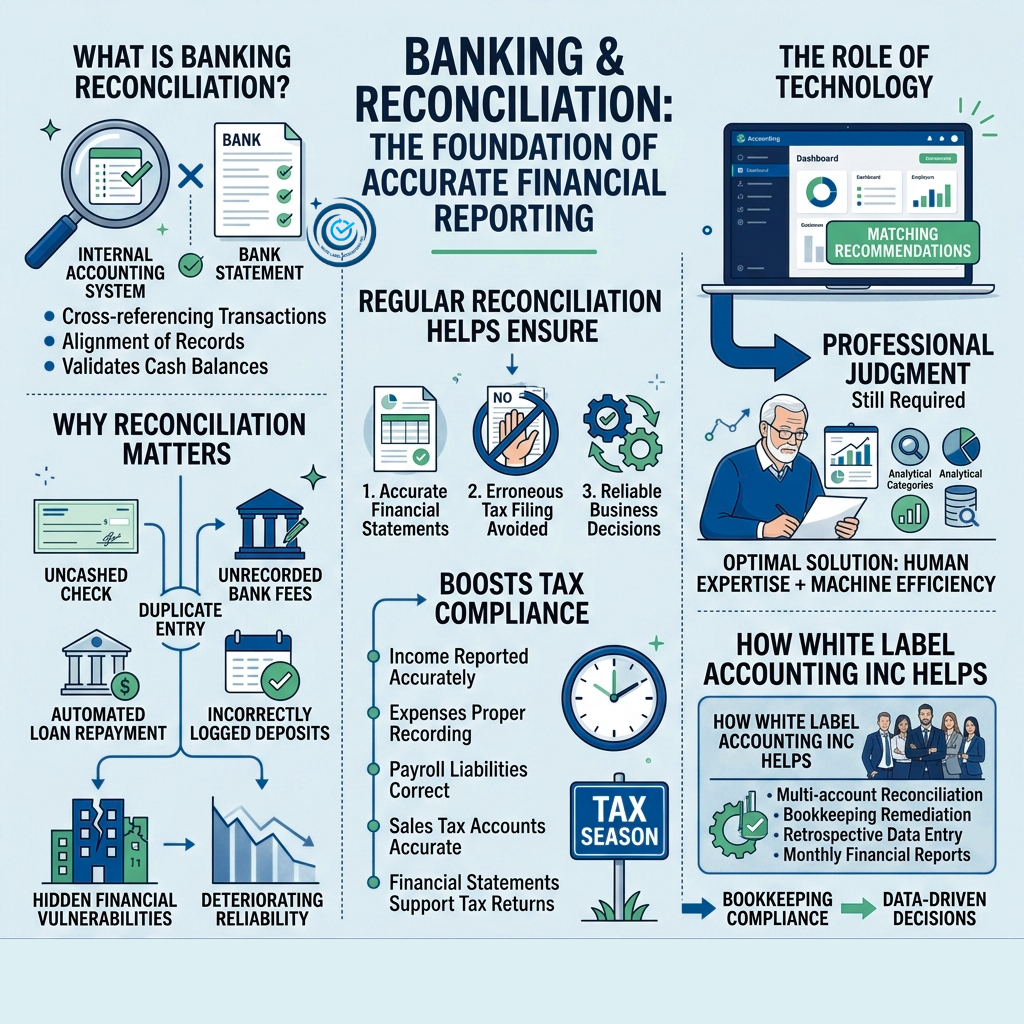
Bank reconciliation is the procedure of cross-referencing transactions logged in a company’s internal accounting system with those detailed on its bank statements. The primary objective is to guarantee complete alignment between both sets of records. Executing this process successfully validates five critical financial requirements, most notably the exactness of cash balances. Fundamentally, it is an indispensable mechanism for maintaining the integrity of an organization's financial data, yet it remains readily accessible to business owners without formal financial expertise.
Why Banking Reconciliation Matters
Many owners of micro, small, and medium-sized enterprises (MSMEs) operate under the misconception that an accurate corporate bank account balance indicates complete financial stability. However, relying exclusively on bank balances fails to accurately reflect a company's comprehensive financial status. Numerous recording discrepancies—including uncashed checks, duplicate transaction entries, unrecorded bank fees, automated loan repayments, and incorrectly logged deposits—cannot be identified through basic balance inquiries alone.
Regular bank reconciliation serves six core functions designed to systematically uncover these hidden financial vulnerabilities. Without standardized reconciliation procedures, the reliability of a company's accounting records will inevitably deteriorate. We have categorized six common types of bank transactions that necessitate reconciliation, pairing each with its fundamental requirements.
Additionally, we have outlined five prevalent reconciliation challenges frequently encountered by MSMEs. If allowed to accumulate without correction, these seemingly minor discrepancies will ultimately compromise the accuracy of financial reporting. This creates latent risks for subsequent strategic decision-making and regulatory compliance. Ultimately, this is a critical financial detail that is frequently overlooked by business owners lacking professional financial expertise.
Banking Reconciliation and Tax Compliance
The primary advantage of executing routine bank reconciliations is the enhancement of corporate tax compliance. Given that tax filings are fundamentally reliant on accurate accounting ledgers, discrepancies within these records can precipitate significant reporting errors. Implementing this practice safeguards the five-core fiscal and tax compliance standards, ultimately mitigating unforeseen complications for businesses during the tax filing season.
Regular reconciliation helps ensure:
Income is reported accurately
Expenses are properly recorded
Payroll liabilities are correct
Sales tax accounts are accurate
Financial statements support tax returns
The Role of Technology in Banking Reconciliation
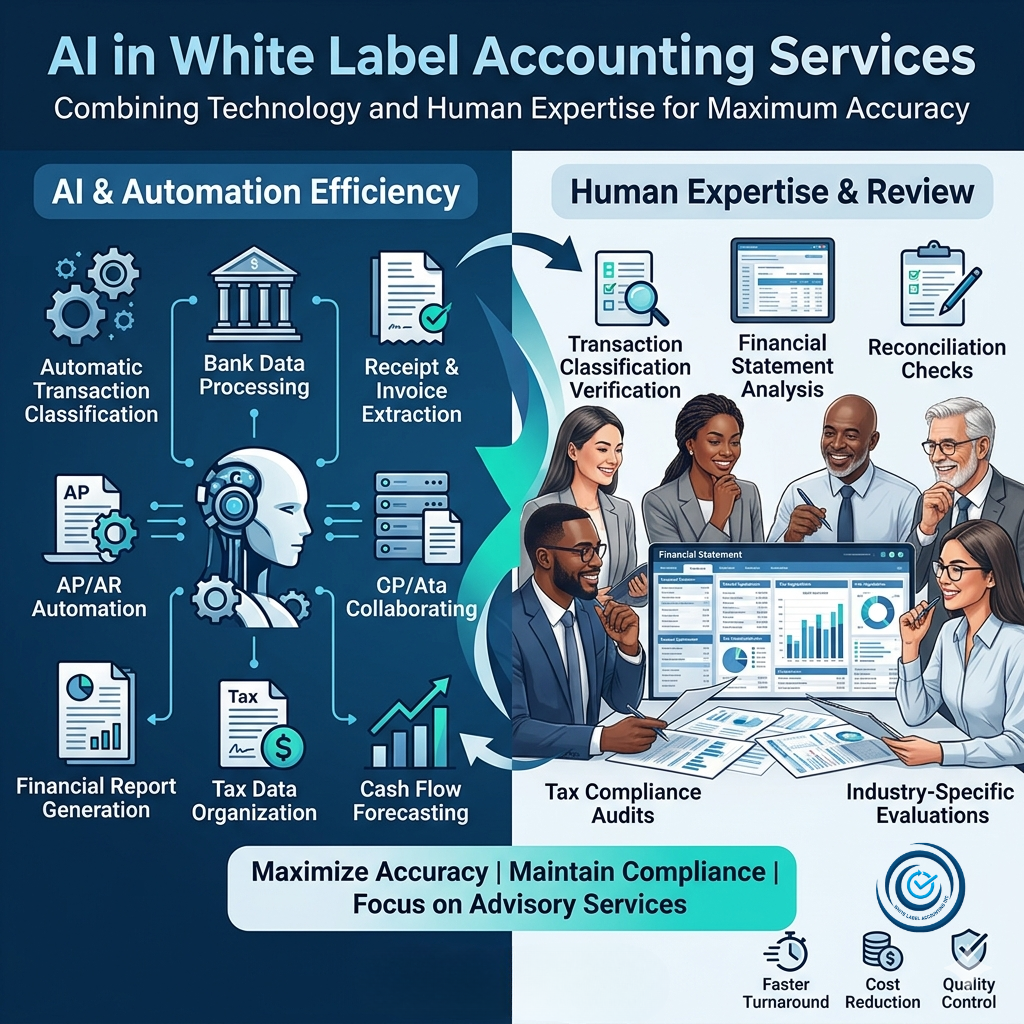
Contemporary accounting software has fundamentally transformed the bank reconciliation process. The automated tools integrated into these systems provide four primary functions. While these features significantly enhance operational efficiency, they do not eliminate the necessity for manual oversight. Because the software primarily generates matching recommendations, financial professionals must still manually verify the accuracy of all transactions.
While data processing technology can swiftly execute batch calculations, the accounting profession fundamentally relies on professional judgment. Senior accountants possess the expertise to identify five distinct categories of professional issues, providing a level of analytical depth that pure automation cannot replicate. Consequently, the strategic integration of human expertise and machine efficiency represents the optimal solution.
How White Label Accounting Inc Helps
White Label Accounting Inc. has introduced a comprehensive banking and reconciliation service designed to ensure clients maintain accurate and up-to-date financial records. The solution encompasses a broad spectrum of offerings, including multi-account reconciliation, bookkeeping remediation, retrospective data entry, and the generation of monthly financial reports. Tailored for general enterprises, CPA practices, and other accounting firms, the service is engineered to guarantee bookkeeping compliance and facilitate informed, data-driven operational decisions.


Copyright © 2025 White Label Accounting Inc. All Rights Reserved | Developed by WITH U Technology Pvt. Ltd.