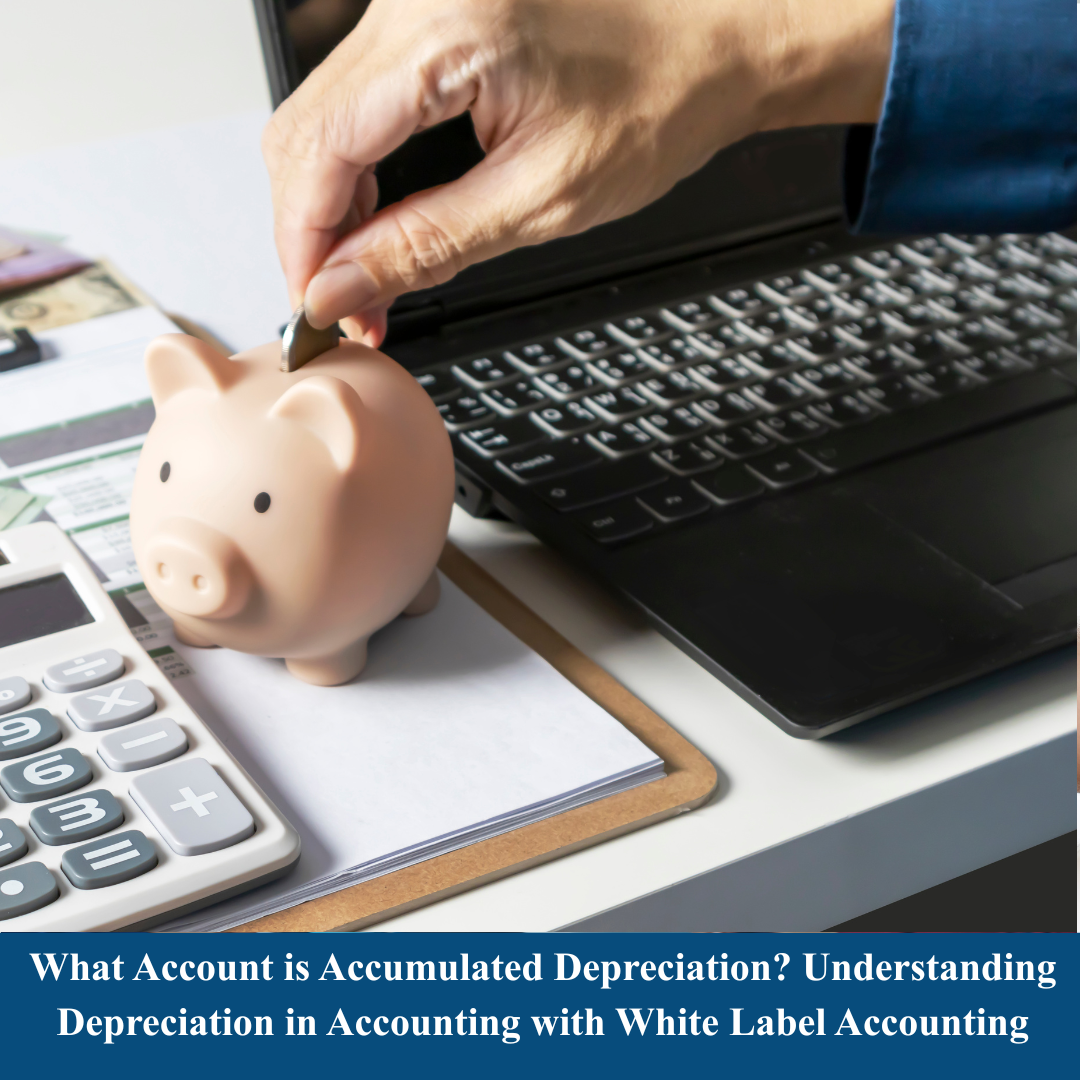
In accounting, accumulated depreciation refers to the total amount of depreciation expense recorded over time for a fixed asset. Understanding accumulated depreciation is essential for businesses to accurately reflect the value of their assets on financial statements.
At White Label Accounting, we specialize in helping businesses manage their financial records, including proper accounting for accumulated depreciation. In this blog, we’ll break down the concept of accumulated depreciation and explain how our expert accounting services can assist with depreciation management and financial reporting.
Accumulated depreciation is a contra asset account that reflects the cumulative depreciation of a company's assets. Depreciation represents the allocation of an asset's cost over its useful life, and accumulated depreciation records the total depreciation amount deducted from an asset’s original cost on the balance sheet.
Depreciation Expense:
As an asset ages, businesses allocate a portion of its cost as an expense each year. The type of asset and its useful life determine the depreciation method used, such as straight-line depreciation or declining balance depreciation.
Contra Asset Account:
The accumulated depreciation account is considered a contra asset account. This means it is paired with a related asset account (like machinery or equipment) but has a credit balance, which reduces the total value of the asset over time.
Balance Sheet Presentation:
On the balance sheet, accumulated depreciation is shown below the original cost of the asset. The difference between the asset’s original cost and the accumulated depreciation is called the net book value or carrying value of the asset.
Suppose your business purchases a machine for $50,000 with an estimated useful life of 10 years. Using the straight-line depreciation method, you would allocate $5,000 in depreciation expense each year.
After three years, the accumulated depreciation would be $15,000 (3 years × $5,000). Therefore, the net book value of the machine on the balance sheet would be $35,000 ($50,000 original cost - $15,000 accumulated depreciation).
Recording accumulated depreciation accurately is vital for:
Reflecting the true value of a company’s assets
Ensuring proper financial reporting
Avoiding overstated asset values and inaccurate financial statements
Supporting informed decision-making, tax filings, and regulatory compliance
At White Label Accounting, we understand the complexities of managing accumulated depreciation and other aspects of asset accounting. Our team can assist your business in key areas:
Depreciation Calculation:
We help determine the most appropriate depreciation method for your assets, ensuring compliance with accounting standards and tax regulations.
Accurate Financial Reporting:
Our team prepares detailed financial statements that accurately reflect accumulated depreciation, enabling informed business decisions.
Asset Management:
We track the depreciation and useful life of assets to keep your books up-to-date and aligned with your financial goals.
Tax Planning and Compliance:
Properly accounting for accumulated depreciation impacts tax planning. Our experts ensure your business maximizes deductions while remaining fully compliant with tax laws.
White Label Accounting provides comprehensive accounting services, including accurate asset accounting and depreciation management. Our experienced accountants ensure your financial records reflect the true value of your assets and comply with all relevant accounting standards.
We offer personalized accounting solutions tailored to your business needs, from asset management and financial reporting to tax planning and compliance.
If you need expert assistance managing accumulated depreciation and other accounting needs, contact White Label Accounting today. Let us help you streamline asset management and ensure accurate financial reporting.




Copyright © 2025 White Label Accounting Inc. All Rights Reserved | Developed by WITH U Technology Pvt. Ltd.