Sales tax compliance in the United States isn’t just a financial task—it’s a constantly shifting landscape shaped by state laws, economic nexus rules, and evolving digital commerce. For modern businesses, especially those selling across multiple states, understanding these complexities is essential to staying compliant and avoiding costly penalties.
Let’s break down how sales tax works across different states—and how you can manage it efficiently.
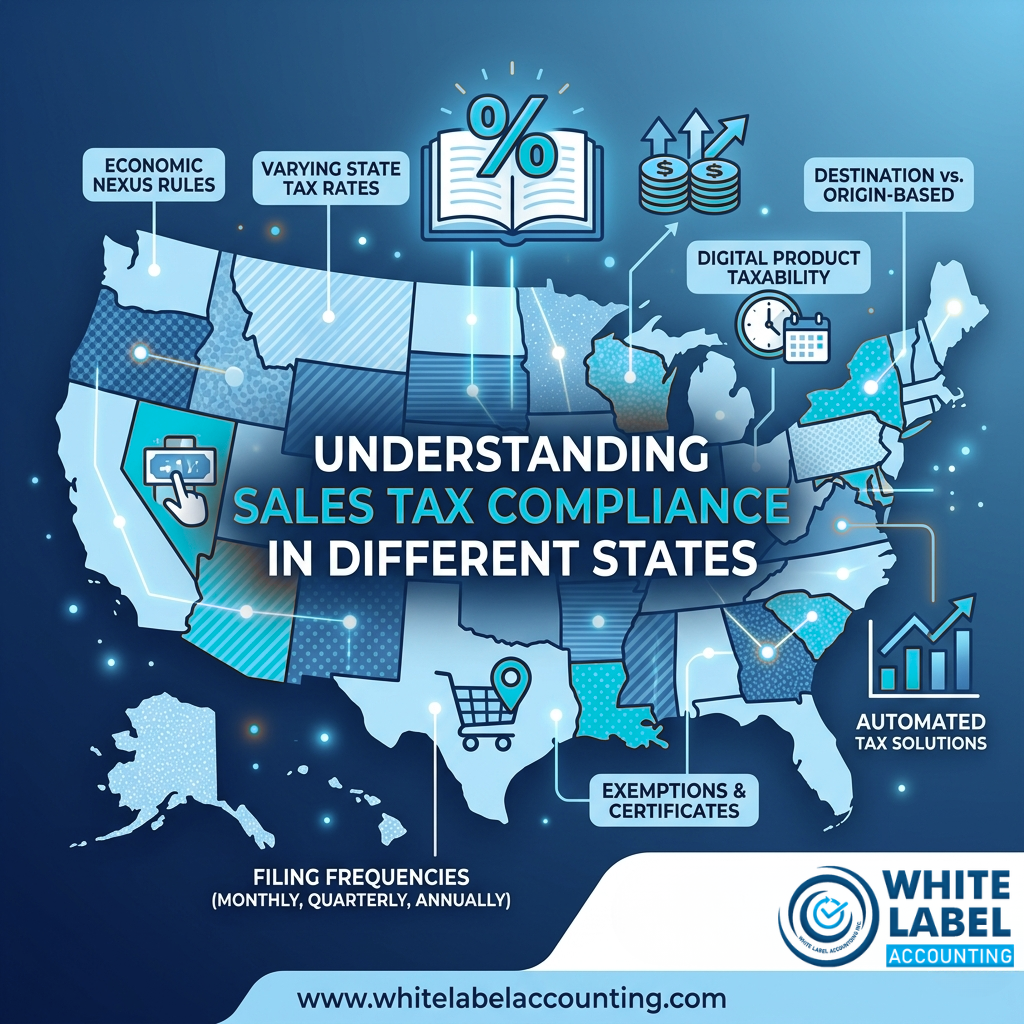
Unlike many countries with a centralized tax system, the U.S. allows each state to define its own sales tax rules. This means:
Different tax rates across states (and even cities)
Varying rules on taxable goods and services
Unique filing frequencies and deadlines
For businesses operating in multiple states, this creates a layered compliance challenge that requires precision and adaptability.
The concept of economic nexus transformed sales tax compliance. Businesses are now required to collect and remit sales tax in a state if they exceed certain thresholds—typically based on:
Revenue (e.g., $100,000 in sales)
Number of transactions (e.g., 200 transactions annually)
Even without a physical presence, your business may still have tax obligations in multiple states.
Sales tax is calculated differently depending on the state:
Origin-based states: Tax is based on the seller’s location
Destination-based states: Tax is based on the buyer’s location
This distinction affects how tax rates are applied and requires accurate location tracking for every transaction.
Not all products and services are taxed equally. For example:
Some states tax digital products, others don’t
Clothing may be tax-exempt in certain states
Services like consulting or SaaS can have different treatments
Understanding what is taxable in each state is key to avoiding under- or over-collection.
States assign filing frequencies based on your sales volume:
Monthly
Quarterly
Annually
Missing deadlines can result in penalties and interest, so staying organized is crucial.
Businesses often deal with:
Tax-exempt customers (e.g., nonprofits)
Resale certificates for wholesale transactions
Proper documentation is essential to validate exemptions and avoid audit issues.
Failing to comply with state sales tax regulations can lead to:
Financial penalties
Interest charges
Audits and legal complications
In a multi-state environment, even small errors can scale quickly.
Managing multi-state sales tax manually is no longer practical. Businesses are turning to:
Automated tax calculation tools
Cloud-based accounting systems
Outsourced accounting experts
These solutions reduce errors, save time, and ensure compliance across jurisdictions.
At White Label Accounting, we understand that sales tax compliance is more than just filing returns—it’s about building a system that works seamlessly as your business grows.
Our approach includes:
Accurate multi-state tax tracking
Automated reporting and filing support
Expert guidance on nexus and taxability
Scalable solutions for expanding businesses
We help you navigate the complexities so you can focus on scaling your operations with confidence.
Sales tax compliance across different states may seem overwhelming, but with the right strategy and support, it becomes manageable. By understanding key concepts like economic nexus, taxability rules, and filing requirements, businesses can stay compliant and avoid unnecessary risks.
In a world of growing eCommerce and cross-border transactions, staying ahead of sales tax regulations isn’t just smart—it’s essential.



Copyright © 2025 White Label Accounting Inc. All Rights Reserved | Developed by WITH U Technology Pvt. Ltd.