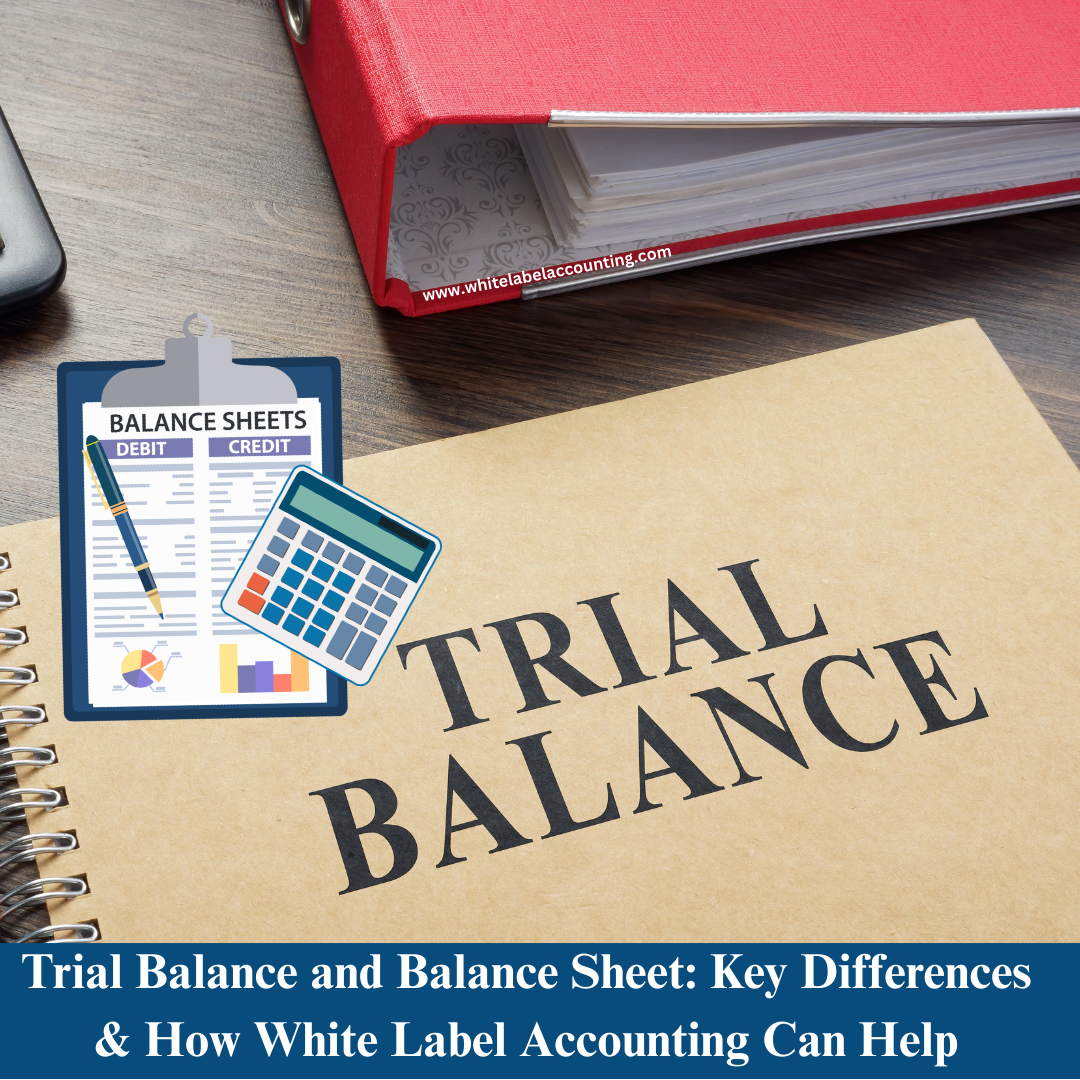
A trial balance is a financial report that lists all the general ledger accounts and their balances at a specific point in time. It serves as an internal accounting tool to ensure that total debits equal total credits, verifying the accuracy of bookkeeping records before preparing financial statements.
Lists all debit and credit balances of ledger accounts.
Ensures the accounting equation is balanced (Assets = Liabilities + Equity).
Helps detect errors in recording transactions.
Used for internal checks before preparing financial statements.
A balance sheet is a formal financial statement that provides a snapshot of a company's financial position at a given date. It presents a business’s assets, liabilities, and equity, helping stakeholders understand its financial health.
Shows what a company owns (assets) and what it owes (liabilities).
Follows the accounting equation: Assets = Liabilities + Equity.
Used by investors, lenders, and stakeholders to assess financial stability.
Required for financial reporting and tax compliance.
Both trial balance and balance sheet play crucial roles in financial management, but they serve different purposes.
Helps detect accounting errors before finalizing financial statements.
Ensures that debits and credits are equal, confirming accuracy.
Assists accountants in preparing adjusting journal entries.
Used internally to verify bookkeeping correctness.
Provides a clear picture of financial health at a specific moment.
Helps businesses track assets, liabilities, and net worth.
Used by investors and lenders to evaluate financial strength.
Essential for tax filing, audits, and financial planning.
Imbalance in Debit and Credit Totals – Errors in ledger entries can cause discrepancies.
Omissions or Duplications – Missing transactions or duplicate postings affect accuracy.
Incorrect Account Classification – Misclassifying transactions can lead to misleading reports.
Unadjusted Balances – Adjustments may be needed for accruals and prepaid expenses.
Misclassification of Assets and Liabilities – Can distort financial ratios.
Inaccurate Valuation of Assets – Depreciation and inventory valuation errors impact financial reporting.
Failure to Reconcile with Trial Balance – If accounts are not correctly adjusted, errors carry over to the balance sheet.
Neglecting Contingent Liabilities – Missing liabilities can affect investor confidence.
At White Label Accounting, we specialize in accurate financial reporting and bookkeeping solutions. Our team ensures that your trial balance and balance sheet are error-free, accurate, and compliant with accounting standards.
Trial Balance Review & Error Detection – We identify and correct imbalances, omissions, and misclassified entries.
Balance Sheet Preparation & Reconciliation – Ensuring assets, liabilities, and equity accounts are properly reported.
Financial Accuracy & Compliance – Following GAAP & IFRS standards for audit-ready reports.
Automated Accounting Software Integration – Using QuickBooks, Xero, and Sage for seamless financial management.
Regular Financial Statement Analysis – Providing insights for better decision-making and business growth.
A manufacturing company approached us with discrepancies in their trial balance. They struggled with:
Unbalanced ledger accounts.
Missing adjusting entries.
Inconsistent asset classification.
Conducted a detailed review of their trial balance.
Identified errors in data entry and incorrect account posting.
Adjusted depreciation entries and reconciled outstanding accounts.
Accurate financial reports leading to improved business planning and decision-making.
Whether you’re a small business owner, accountant, or financial manager, having a correctly prepared trial balance and balance sheet is crucial for business success. Errors in these statements can lead to tax issues, financial mismanagement, and investor concerns.
At White Label Accounting, we ensure accuracy, compliance, and financial clarity for your business. Our expert bookkeeping and financial reporting services help businesses streamline their accounting and avoid costly mistakes.
Get Started Today!
Don’t let accounting errors hold your business back! Contact White Label Accounting today for professional assistance with your trial balance, balance sheet, and financial reporting.




Copyright © 2025 White Label Accounting Inc. All Rights Reserved | Developed by WITH U Technology Pvt. Ltd.