Cash flow isn’t just about money coming in and going out—it’s the lifeblood of your business. You can be profitable on paper and still struggle to pay bills if your cash flow isn’t managed properly.
In today’s fast-moving business environment, managing cash flow requires more than spreadsheets—it demands strategy, visibility, and smart systems. Here’s a fresh, practical guide to help you stay ahead.
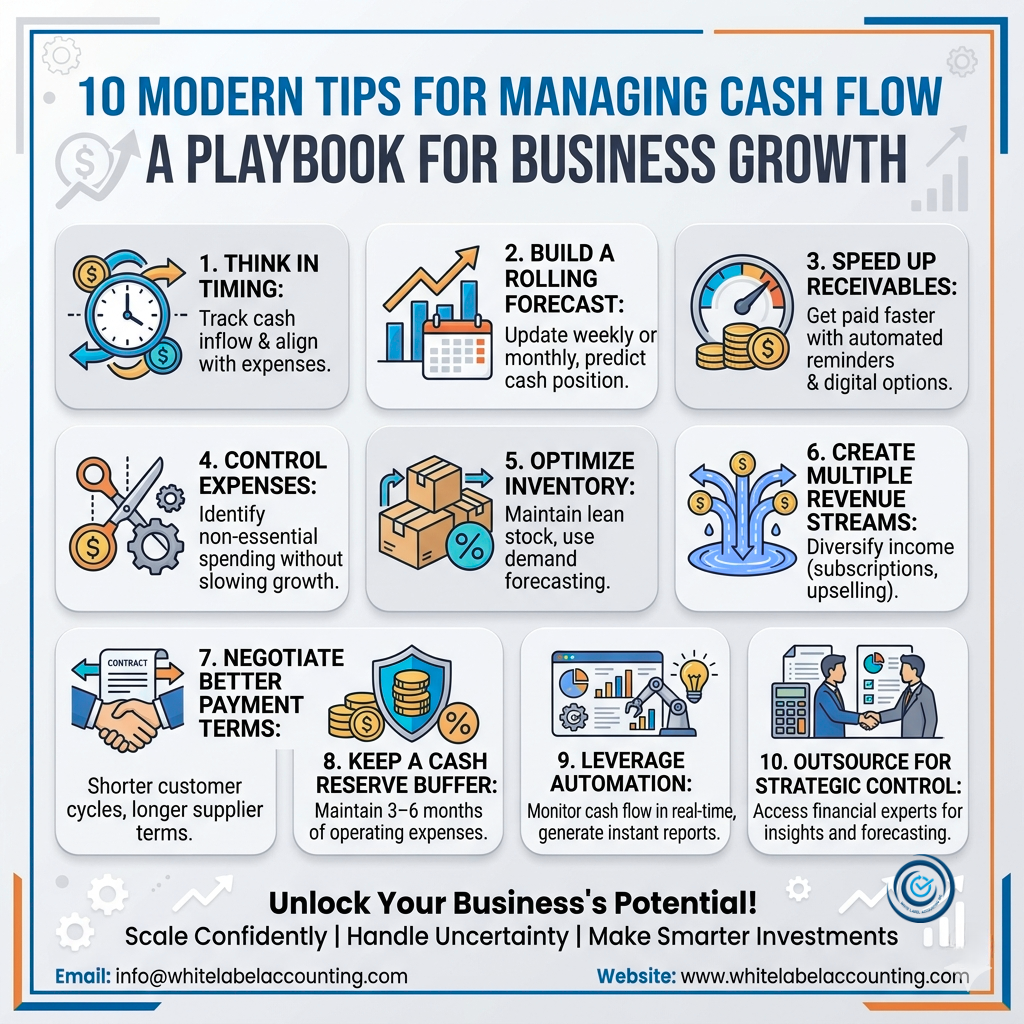
Many business owners focus on how much they earn—but overlook when they receive it.
A $50,000 invoice paid after 60 days can still leave you stuck today.
Shift your mindset:
Track cash inflow timing
Align it with outgoing expenses
Avoid long payment gaps
Static forecasts are outdated. A rolling forecast updates weekly or monthly and helps you predict cash positions ahead of time.
What to include:
Expected income
Fixed and variable expenses
Seasonal fluctuations
This gives you a forward-looking financial radar, not just a rearview mirror.
Delayed payments are one of the biggest cash flow killers.
Smart strategies:
Offer early payment discounts
Send automated reminders
Invoice immediately after delivery
Use digital payment options
The easier you make it to pay, the faster money comes in.
Cutting costs blindly can hurt your business. Instead:
Identify non-essential spending
Renegotiate vendor contracts
Switch to scalable, subscription-based tools
Focus on efficiency, not just reduction.
Excess inventory ties up cash that could be used elsewhere.
Modern approach:
Use demand forecasting
Maintain lean inventory levels
Identify slow-moving products
Cash sitting in a warehouse is cash not working for you.
Relying on one income source increases risk.
Consider:
Subscription models
Upselling or bundling
New product/service lines
Diversified income improves cash flow stability.
Cash flow improves when you control both sides:
Customers: Shorter payment cycles
Suppliers: Longer payment terms
This creates a positive cash flow gap where you receive money before paying it out.
Unexpected expenses are inevitable.
Aim to maintain:
3–6 months of operating expenses
This buffer protects your business from shocks and gives you breathing room.
Manual tracking leads to delays and missed signals.
Modern tools help you:
Monitor cash flow in real time
Generate instant reports
Identify trends early
Real-time visibility = faster, smarter decisions.
Managing cash flow isn’t just bookkeeping—it’s financial strategy.
Outsourcing experts can:
Analyze cash flow patterns
Improve forecasting accuracy
Provide actionable insights
This lets you focus on growth while professionals handle the numbers.
Cash flow management is not about restriction—it’s about control and clarity. When you understand where your money is going and when it’s arriving, you unlock the ability to:
Scale confidently
Handle uncertainty
Make smarter investments
A business with strong cash flow doesn’t just survive—it thrives.

Copyright © 2025 White Label Accounting Inc. All Rights Reserved | Developed by WITH U Technology Pvt. Ltd.