Accounting has quietly undergone one of the most dramatic transformations of any profession in the past decade. What was once defined by spreadsheets, manual reconciliations, and year-end crunches has evolved into a dynamic, real-time, data-driven function. Technology isn’t just supporting accounting anymore—it’s reshaping its purpose.
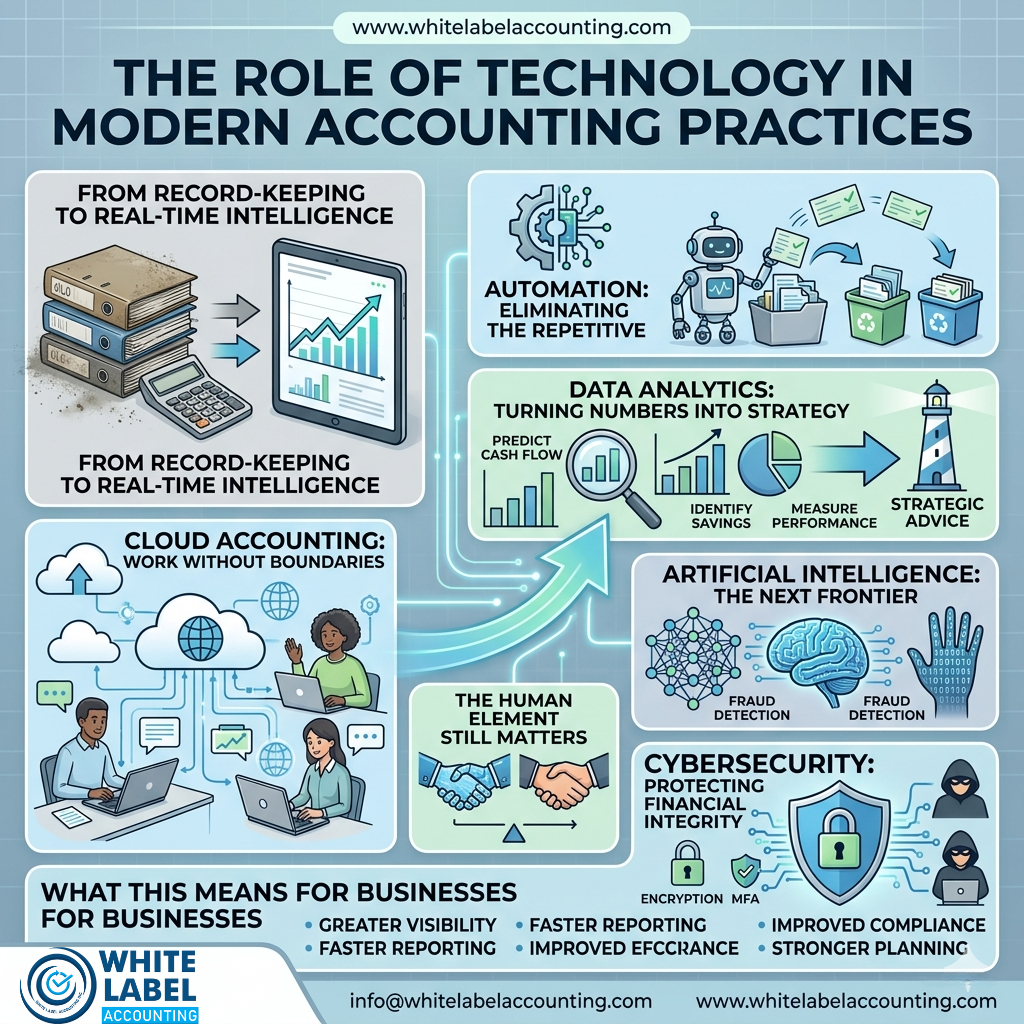
Modern accounting is no longer about simply tracking what has already happened. With cloud-based systems and automation tools, businesses can now access financial data in real time. This shift allows accountants to move beyond historical reporting and into strategic advisory roles.
Instead of asking, “What did we spend last quarter?” businesses can now ask, “How can we optimize our spending next month?” That’s a fundamental change—and it’s powered by technology.
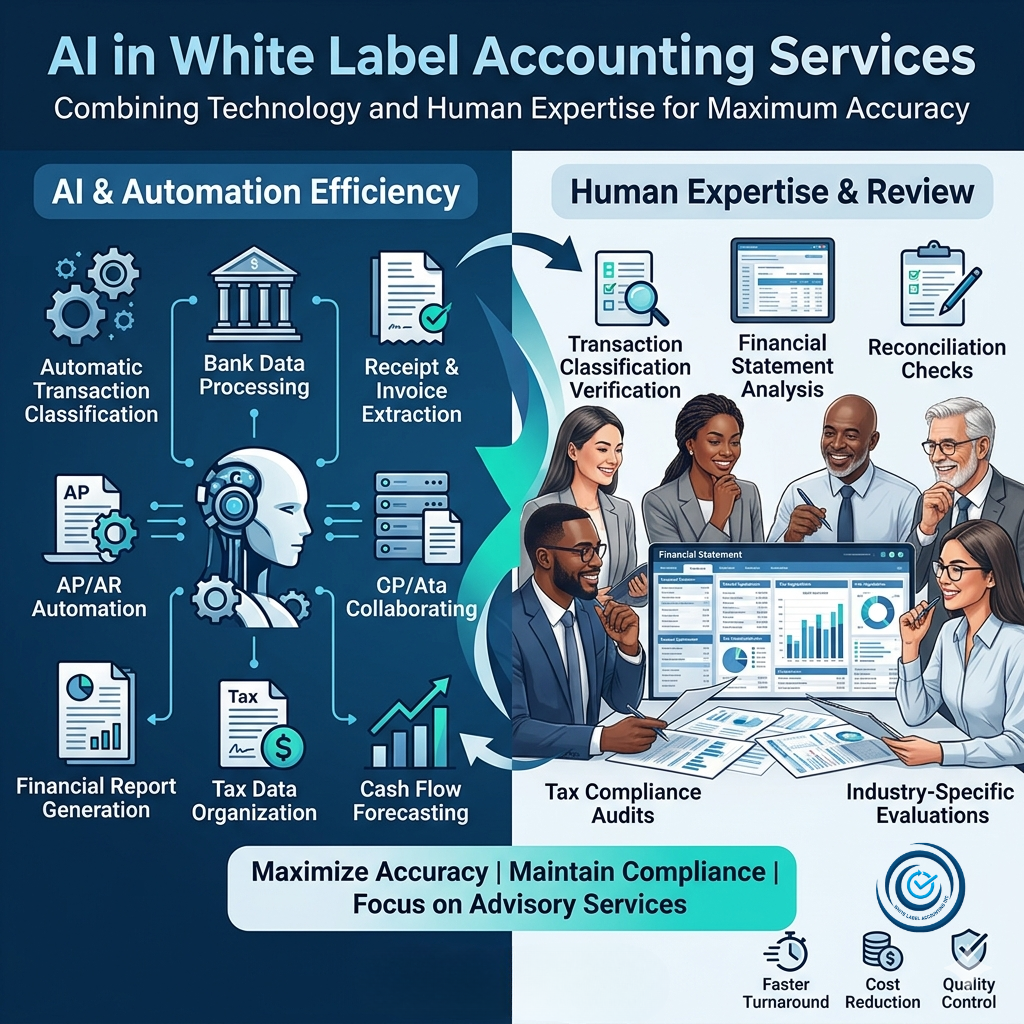
One of the most visible impacts of technology is automation. Tasks like invoice processing, bank reconciliations, payroll calculations, and expense tracking can now be handled with minimal human intervention.
Automation reduces human error, increases speed, and frees up time for accountants to focus on higher-value work. Rather than spending hours matching transactions, professionals can analyze trends, forecast outcomes, and guide business decisions.
Cloud-based accounting platforms have removed the physical limitations of traditional accounting systems. Financial data is no longer tied to a single computer or office. Teams can collaborate across cities—or even continents—in real time.
For businesses, this means improved flexibility, enhanced transparency, and faster decision-making. For accounting firms, it opens the door to scalable, remote service models that can support clients globally.
Data is only valuable if it leads to insight. Advanced analytics tools now allow accountants to interpret financial data in more meaningful ways.
By identifying patterns, anomalies, and opportunities, accountants can help businesses:
Predict cash flow challenges
Identify cost-saving opportunities
Measure performance more accurately
Make proactive financial decisions
This evolution turns accountants into strategic partners rather than just financial record-keepers.
Artificial Intelligence (AI) is pushing accounting into an even more advanced phase. AI-powered tools can categorize transactions, detect fraud, and even provide financial recommendations based on historical data.
While AI won’t replace accountants, it will redefine their role. The future accountant is not just technically skilled but also analytically sharp and strategically minded.
As accounting becomes more digital, the importance of cybersecurity grows. Financial data is one of the most sensitive assets a business holds, making it a prime target for cyber threats.
Modern accounting practices must incorporate strong security protocols, including:
Data encryption
Multi-factor authentication
Regular system audits
Secure cloud infrastructure
Trust is the foundation of accounting, and technology must reinforce—not weaken—that trust.
Despite all these advancements, technology doesn’t replace human judgment. It enhances it. Decision-making, ethical considerations, and strategic thinking remain firmly in the hands of professionals.
The most successful accounting firms are those that strike the right balance—leveraging technology for efficiency while maintaining a strong human touch for insight and relationships.
For businesses, embracing modern accounting technology is no longer optional—it’s essential. Companies that adopt digital tools gain:
Greater financial visibility
Faster reporting cycles
Improved compliance
Stronger strategic planning
Those that resist risk falling behind in a fast-moving, data-driven economy.
The accounting industry is no longer playing catch-up with technology—it’s becoming a leader in digital transformation. From automation to AI, the tools available today are redefining what’s possible.
At www.whitelabelaccounting.com, the focus is on helping firms and businesses harness these technologies to deliver smarter, faster, and more scalable accounting solutions.
Because in modern accounting, success isn’t just about balancing the books—it’s about unlocking the story behind the numbers.

Copyright © 2025 White Label Accounting Inc. All Rights Reserved | Developed by WITH U Technology Pvt. Ltd.