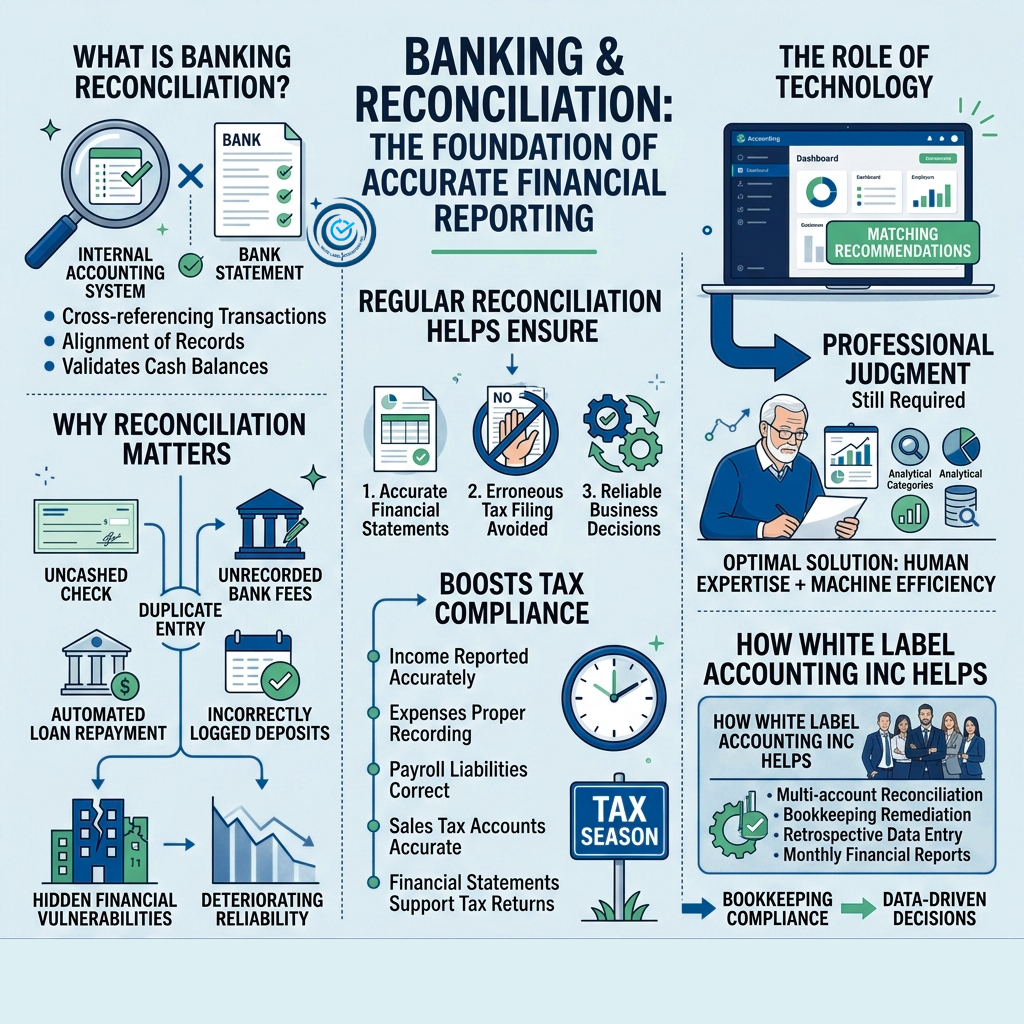
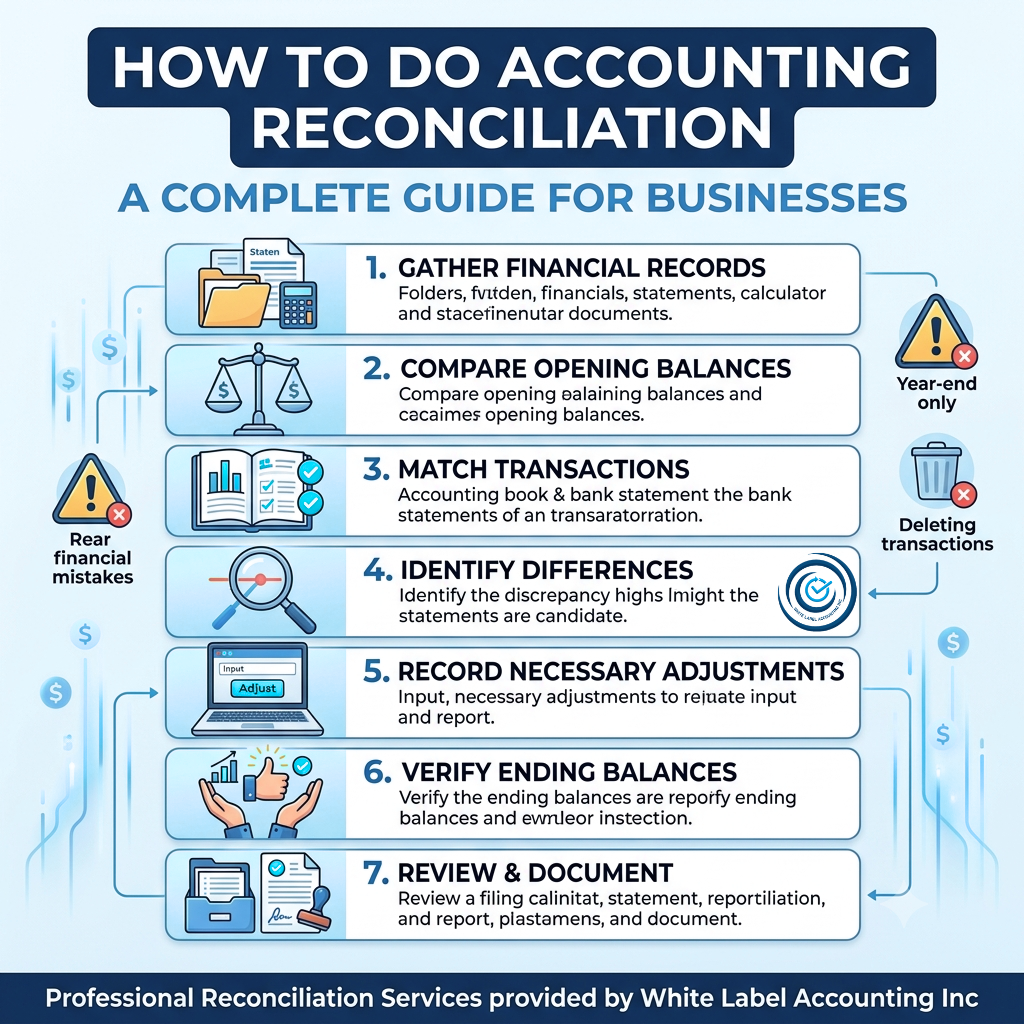
In today’s fast-moving business landscape, decisions are only as good as the data behind them. Yet, many businesses unknowingly operate on financial information that hasn’t been fully verified. This is where regular financial reconciliation becomes not just important—but essential.
Think of reconciliation as a financial “reality check.” It ensures that what your internal records say matches what actually exists in your bank accounts, payment systems, and financial statements. Without it, even small discrepancies can snowball into major issues.
Financial reconciliation is often viewed as a routine back-office task. In reality, it’s a powerful control mechanism that protects your business from risk, uncertainty, and poor decision-making.
Over time, minor errors—missed entries, duplicate transactions, or timing differences—can distort your financial records. Regular reconciliation keeps your books aligned with reality, ensuring that every number you rely on is accurate and trustworthy.
You can’t manage what you can’t clearly see. Reconciliation gives you a complete view of:
Actual cash balances
Outstanding payments and receipts
Real-time financial position
This clarity is critical for planning and operational control.
Unusual or unauthorized transactions rarely go unnoticed when reconciliation is done consistently. By reviewing and matching records frequently, businesses can quickly identify suspicious activity and take corrective action before damage escalates.
Cash flow issues often arise not from lack of revenue, but from poor visibility. Reconciliation ensures you know exactly how much cash is available, what’s pending, and what’s committed—helping you avoid surprises and manage liquidity effectively.
Your financial reports are only as reliable as the data behind them. Regular reconciliation ensures that your:
Profit and Loss statements
Balance sheets
Cash flow reports
are accurate, consistent, and decision-ready.
When your accounts are regularly reconciled, audits become a process of validation—not investigation. Clean records reduce audit queries, save time, and demonstrate strong financial discipline.
Waiting until month-end (or later) to reconcile often leads to time-consuming investigations. Frequent reconciliation breaks the process into manageable steps, making it quicker and far less overwhelming.
As your business grows, transaction volumes increase. Without regular reconciliation, complexity can quickly lead to chaos. A consistent reconciliation process ensures your financial systems remain structured and scalable.
From pricing strategies to expansion plans, every major decision depends on financial insight. Reconciled data eliminates guesswork, giving leaders the confidence to act decisively.
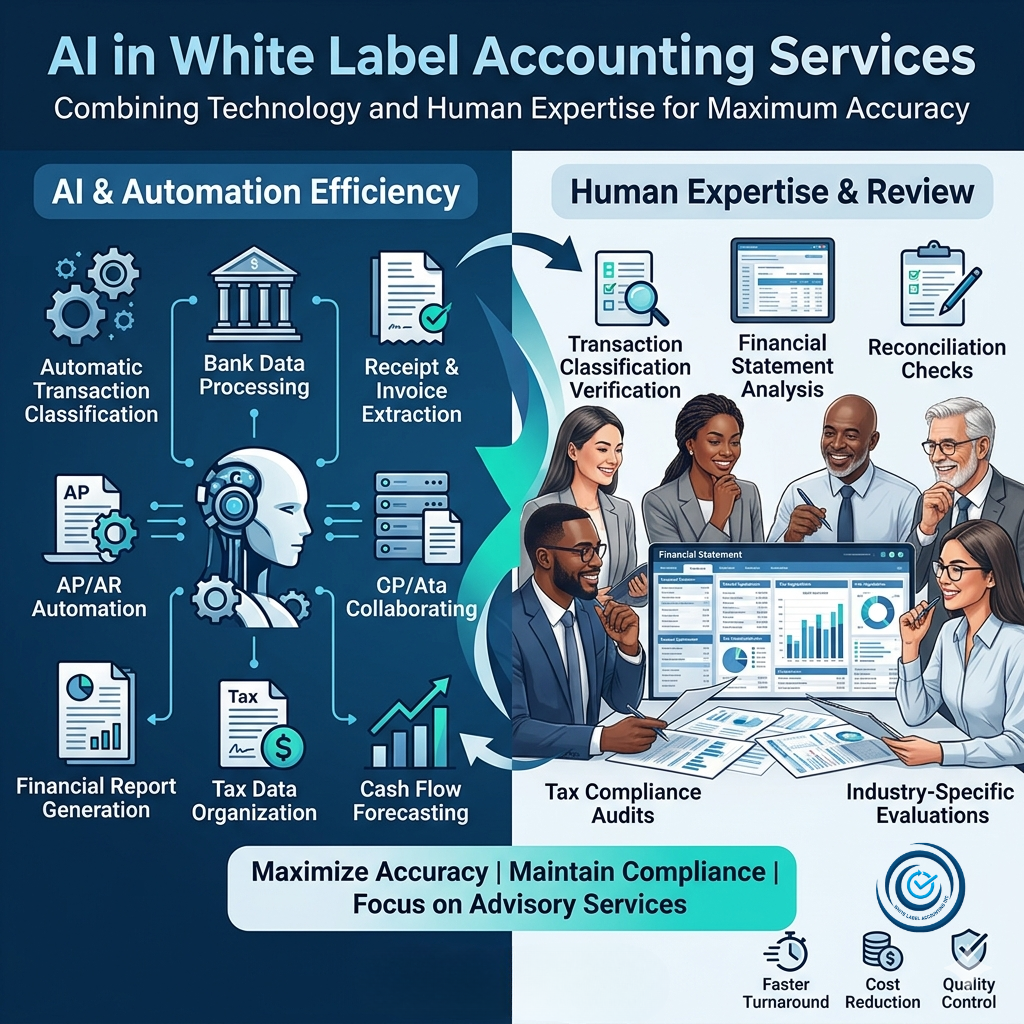
Today, reconciliation is no longer just manual matching. With cloud accounting tools and automation, businesses can:
Sync transactions in real time
Flag discrepancies instantly
Maintain continuous financial accuracy
This modern approach transforms reconciliation from a periodic task into an ongoing advantage.
Regular financial reconciliation is more than an accounting necessity—it’s a business essential. It ensures accuracy, builds trust in your numbers, and empowers smarter decisions at every level.
At www.whitelabelaccounting.com, we help businesses turn reconciliation into a seamless, efficient, and value-driven process. Because when your numbers are right, everything else follows.


Copyright © 2025 White Label Accounting Inc. All Rights Reserved | Developed by WITH U Technology Pvt. Ltd.