As the calendar year winds down, businesses and individuals alike face a critical opportunity—one that can significantly impact their financial health. End-of-year tax planning isn’t just about reducing liabilities; it’s about making smart, forward-looking decisions that position you for stronger growth in the coming year.
At White Label Accounting, we believe tax planning should feel less like a last-minute scramble and more like a strategic advantage. Here’s how modern businesses can approach year-end tax planning with clarity and confidence.
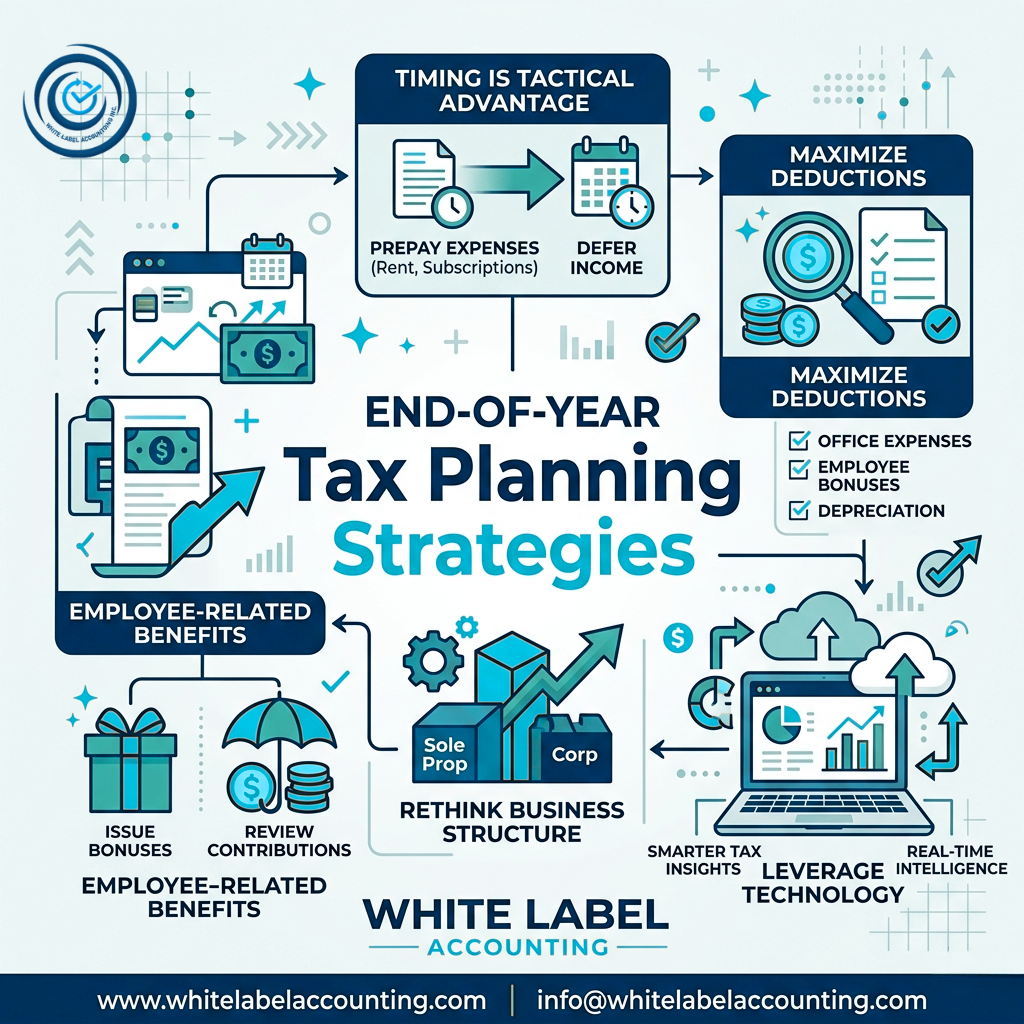
One of the most powerful tools in tax planning is timing. By accelerating expenses or deferring income, businesses can influence their taxable income for the current year.
For example, prepaying certain operational costs—like rent, subscriptions, or vendor payments—before year-end can reduce taxable profits. On the flip side, delaying invoicing until the new year (when appropriate) may help shift income into the next tax period.
When done strategically, these adjustments can create immediate tax savings without disrupting your business operations.
Many businesses leave money on the table simply because they overlook eligible deductions. End-of-year is the perfect time to review:
Office expenses and software subscriptions
Employee benefits and bonuses
Travel and business-related costs
Depreciation on assets and equipment
A thorough review ensures you’re capturing every legitimate deduction available—improving both cash flow and profitability.
Modern accounting isn’t just about record-keeping—it’s about real-time intelligence. Cloud-based platforms allow businesses to analyze financial data instantly, making tax planning more precise and proactive.
Instead of guessing where you stand, you can access up-to-date reports that highlight opportunities for savings and flag potential risks before they become problems.
Year-end is also a smart time to evaluate whether your current business structure is still serving you well. As your company grows, the tax implications of operating as a sole proprietorship, partnership, or corporation can change significantly.
Adjusting your structure at the right time can unlock tax efficiencies and better align with your long-term goals.
Compensation strategies can play a key role in tax planning. Consider:
Issuing bonuses before year-end to claim deductions
Reviewing retirement contributions for both employers and employees
Exploring tax-efficient benefit structures
These steps not only optimize your tax position but also strengthen employee satisfaction and retention.
The biggest mistake businesses make? Waiting too long.
Effective tax planning requires time—time to analyze, adjust, and implement strategies without pressure. Starting early allows you to make thoughtful decisions rather than reactive ones.
Tax regulations are constantly evolving, and staying compliant while optimizing savings can be complex. That’s why partnering with experienced professionals makes a difference.
White Label Accounting provides tailored, forward-thinking solutions that go beyond compliance. We help businesses identify opportunities, minimize risk, and create tax strategies that support sustainable growth.
End-of-year tax planning isn’t just about closing the books—it’s about setting the stage for what comes next. With the right strategies in place, you can reduce liabilities, improve cash flow, and enter the new year with confidence.
If you’re ready to approach tax planning with a smarter, more strategic mindset, visit www.whitelabelaccounting.com and discover how expert guidance can transform your financial outcomes.

Copyright © 2025 White Label Accounting Inc. All Rights Reserved | Developed by WITH U Technology Pvt. Ltd.