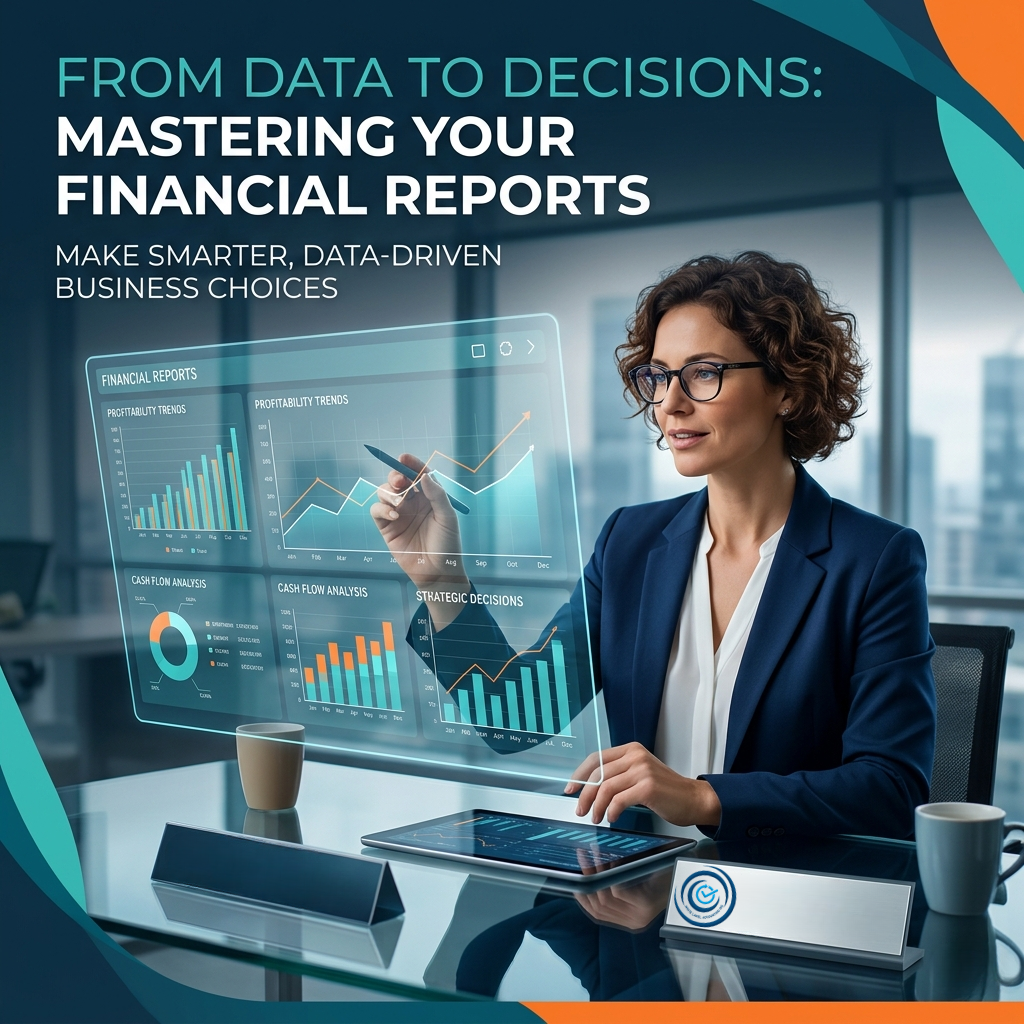
Data doesn’t drive decisions—interpreted data does. Financial reports are often treated like routine paperwork, but in reality, they are one of the most powerful decision-making tools a business has. The difference between companies that grow strategically and those that react blindly often comes down to how well they use their numbers.
Let’s move beyond basic reading and explore how to actively use financial reports to make sharper, more confident business decisions.
Financial reports are not just historical records; they’re signals. Each number tells you something about performance, efficiency, and risk. Instead of asking “What are the numbers?”, ask:
What changed?
Why did it change?
What should we do next?
This shift in mindset turns reports into actionable intelligence.
Every business has a few core drivers—revenue streams, cost centers, or operational metrics that matter most.
Use your reports to pinpoint:
Which products or services generate the highest margins
Which expenses are increasing without proportional returns
Which segments are underperforming
Instead of spreading focus across everything, concentrate on what truly impacts profitability.
A profitable business on paper isn’t always healthy. Financial reports help you connect theory to reality:
Is revenue growth supported by actual cash inflow?
Are profits coming from core operations or one-time gains?
Are rising costs quietly eroding margins?
This clarity prevents overconfidence and helps avoid risky decisions based on incomplete insights.
Looking at one period in isolation is like checking a single frame of a movie—you miss the plot.
Track trends across:
Monthly and quarterly performance
Seasonal fluctuations
Long-term growth patterns
Trends reveal direction. They help you anticipate slowdowns, prepare for demand spikes, and adjust strategy before problems escalate.
When actual results differ from your budget or forecast, that gap is where insight lives.
Instead of treating variances as problems, treat them as questions:
Why did we exceed our revenue target?
Why are expenses higher than expected?
Is this a one-time issue or a recurring pattern?
Each answer gives you an opportunity to refine your strategy.
When financial reports are clear and up to date, decision-making becomes faster:
Pricing adjustments can be made with confidence
Hiring decisions can align with financial capacity
Expansion plans can be backed by real data
Without reliable reports, decisions become guesswork—and guesswork is expensive.
As businesses grow, financial data becomes more complex. Multiple revenue streams, global operations, and evolving compliance requirements can make reports harder to interpret.
That’s where expert support makes a difference. Partnering with a specialized provider like White Label Accounting helps ensure:
Accurate and timely financial reporting
Clear, structured insights
Scalable accounting processes
More time to focus on strategic decisions
Instead of getting buried in numbers, you get clarity and direction.
Financial reports are not the end goal—they’re the starting point. The real value lies in what you do with them.
Businesses that consistently review, question, and act on their financial data are better positioned to:
Adapt quickly
Minimize risks
Maximize profitability
In a competitive landscape, informed decisions aren’t just an advantage—they’re essential.


Copyright © 2025 White Label Accounting Inc. All Rights Reserved | Developed by WITH U Technology Pvt. Ltd.