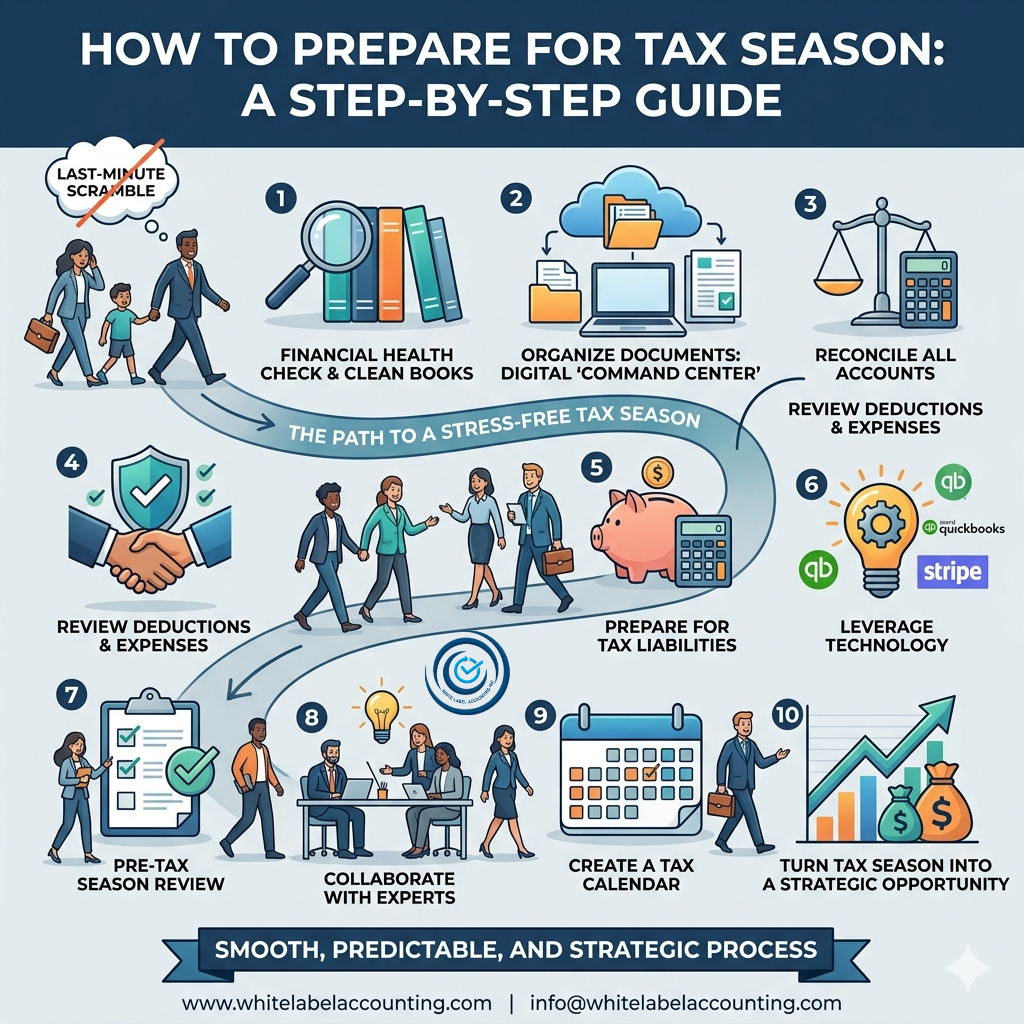
Tax season doesn’t have to feel like a last-minute scramble or a stressful countdown. With the right preparation, it can become a structured, predictable process—one that actually strengthens your financial clarity instead of disrupting it.
Whether you’re a growing business or an established firm, preparing for tax season is about building a system that works before deadlines hit.
Before diving into forms and filings, take a step back and assess your financial records. Are your books up to date? Are there any gaps or inconsistencies?
This is the foundation. Clean, accurate books ensure:
Correct tax calculations
Fewer last-minute adjustments
Reduced audit risks
If your records are messy, fixing them early saves time, money, and stress later.
Tax preparation becomes significantly easier when everything is in one place. Create a centralized system (digital or cloud-based) for:
Income statements
Expense receipts
Bank and credit card statements
Payroll records
Previous tax returns
Think of this as building your financial “command center”—easy to access, easy to review.
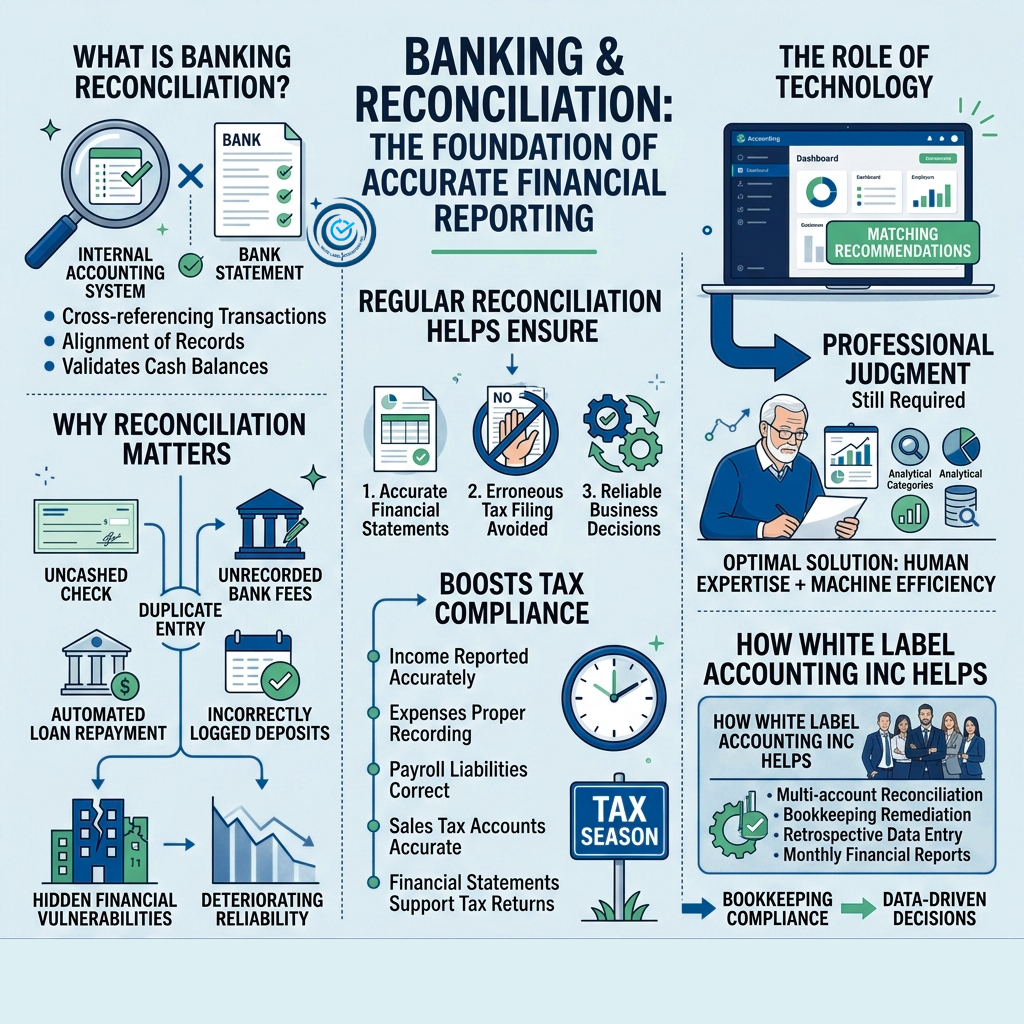
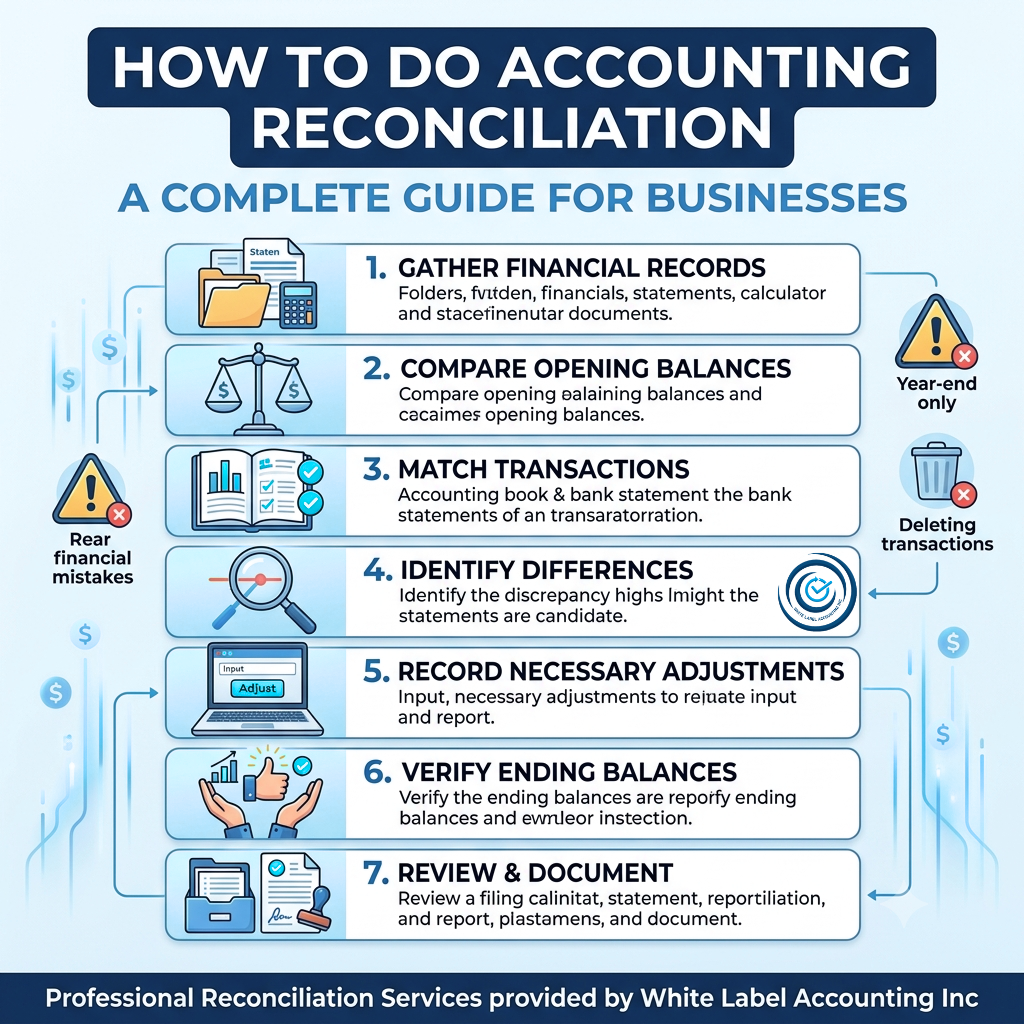
Reconciliation is where accuracy is confirmed. Every transaction in your books should match your bank, payment gateways, and financial systems.
This step helps you:
Identify missing or duplicate entries
Catch errors before filing
Ensure your reported numbers are reliable
Consistent reconciliation transforms tax filing from guesswork into precision.
Many businesses overpay taxes simply because they miss eligible deductions. Take time to review:
Operational expenses
Software and subscriptions
Travel and business-related costs
Employee benefits
Proper categorization ensures you’re not leaving money on the table while staying compliant.
Avoid surprises by estimating your tax obligations in advance. Set aside funds for:
Income tax
GST or sales tax
Payroll-related taxes
This proactive approach protects your cash flow and prevents last-minute financial strain.
Modern accounting tools simplify tax preparation when used correctly. Platforms like QuickBooks Online help track transactions, while payment systems like Stripe streamline revenue collection.
But tools alone aren’t enough—proper setup, integration, and reconciliation are key to ensuring accurate reports.
Before filing, perform a final internal review:
Verify financial statements
Double-check tax calculations
Ensure compliance with current regulations
This step acts as a safety net, catching issues before they become costly mistakes.
Tax laws evolve, and compliance requirements can become complex as your business grows. Working with professionals ensures:
Accurate filings
Strategic tax planning
Reduced risk of penalties
It also frees up your time to focus on running your business instead of decoding tax rules.
The best way to prepare for next tax season is to start now. Build a compliance calendar that includes:
Filing deadlines
Payment due dates
Monthly bookkeeping and reconciliation tasks
Consistency throughout the year eliminates the need for last-minute rushes.
Tax season isn’t just about compliance—it’s a chance to evaluate your financial performance. Use this time to:
Identify growth opportunities
Optimize expenses
Plan for the upcoming year
With the right mindset, tax preparation becomes a tool for smarter decision-making.
Preparing for tax season doesn’t have to be overwhelming. With a structured approach, reliable systems, and expert support, it becomes a smooth, predictable process.
At www.whitelabelaccounting.com, we help businesses and accounting firms streamline their financial operations—so tax season becomes less about stress and more about strategy.


Copyright © 2025 White Label Accounting Inc. All Rights Reserved | Developed by WITH U Technology Pvt. Ltd.