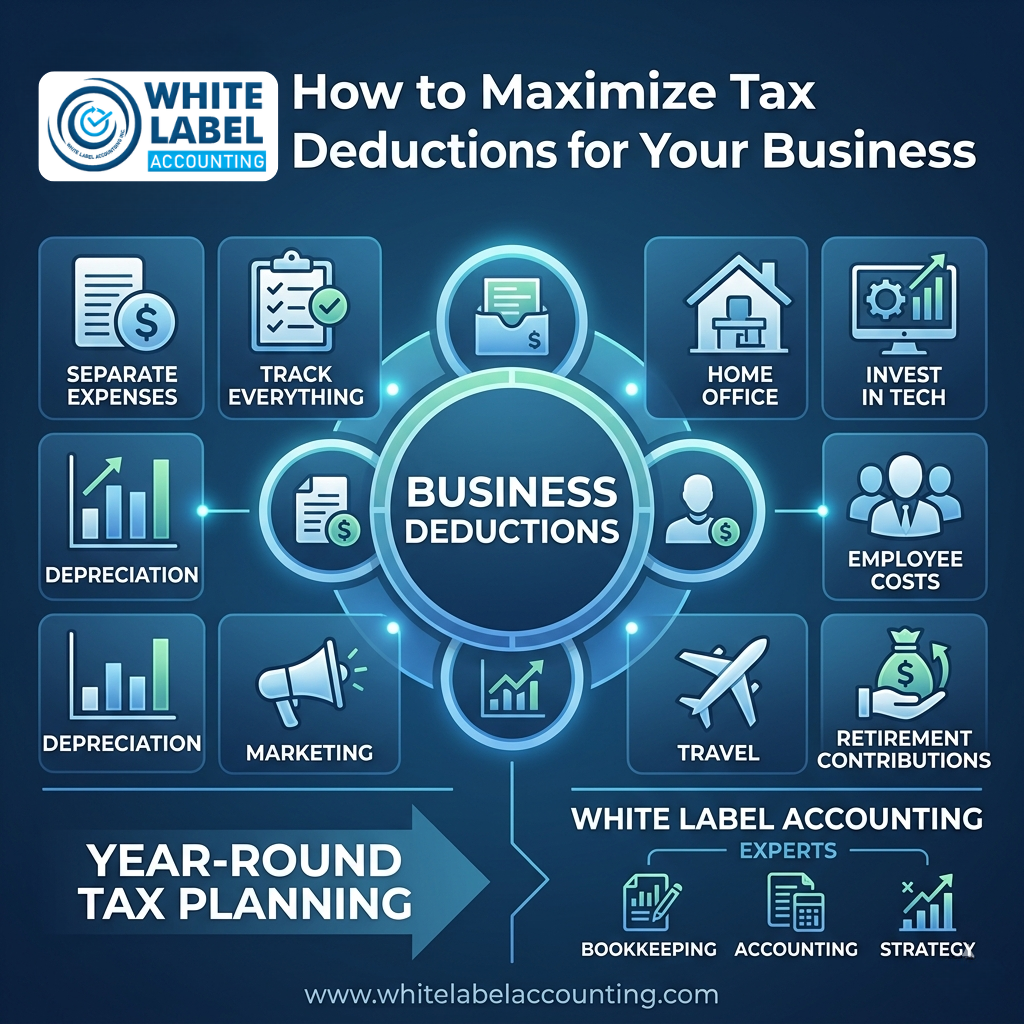
Running a successful business is not just about increasing revenue — it’s also about managing expenses strategically and minimizing unnecessary tax liabilities. Every year, many businesses miss valuable tax deductions simply because they lack proper financial planning or organized bookkeeping systems.
Understanding how to maximize tax deductions can significantly improve your cash flow, strengthen profitability, and create more opportunities for business growth.
At White Label Accounting, we help businesses simplify financial management while uncovering opportunities to optimize tax savings efficiently and compliantly.
Let’s explore modern strategies that can help your business maximize deductions and improve financial performance.
Tax deductions lower your taxable income, which means your business pays less in taxes legally and strategically. Proper deduction planning allows businesses to:
Improve cash flow
Reduce operational costs
Increase profitability
Reinvest in growth
Maintain stronger financial stability
However, maximizing deductions requires accurate record keeping and a proactive financial approach throughout the year — not just during tax season.
One of the most common mistakes business owners make is mixing personal and business transactions. This creates confusion during tax preparation and may result in missed deductions or compliance issues.
Maintain separate business bank accounts
Use dedicated business credit cards
Organize all financial transactions digitally
Clear separation simplifies bookkeeping and improves deduction accuracy.
Small expenses often add up to significant yearly deductions. Businesses should consistently track:
Office supplies
Software subscriptions
Internet and phone bills
Travel expenses
Marketing costs
Professional services
Business meals
Equipment purchases
Cloud-based accounting systems can automatically categorize and store expenses in real time, reducing manual work and improving reporting accuracy.
With remote and hybrid work models becoming more common, many business owners qualify for home office deductions.
Eligible expenses may include:
Internet usage
Utilities
Workspace maintenance
Rent or mortgage allocation
The key is ensuring the workspace is used regularly and exclusively for business purposes.
Technology investments are often deductible and can improve long-term efficiency.
Deductible technology expenses may include:
Accounting software
Payroll systems
Business laptops
Cloud storage
Cybersecurity tools
CRM platforms
Investing in operational technology not only supports tax savings but also improves productivity and scalability.
Large business assets such as:
Vehicles
Machinery
Furniture
Equipment
can often be depreciated over time, allowing businesses to deduct portions of the asset cost annually.
Strategic depreciation planning can create significant long-term tax benefits.
Businesses can generally deduct:
Salaries and wages
Bonuses
Freelance contractor payments
Employee training programs
Benefits and retirement contributions
Investing in your workforce often creates both operational and tax advantages.
Modern businesses invest heavily in digital growth, and many marketing expenses are deductible, including:
Website development
Social media advertising
SEO services
Content creation
Branding campaigns
Online advertising
Strategic marketing investments can support both visibility and tax efficiency.
Business-related travel expenses may include:
Flights
Hotels
Transportation
Mileage
Meals during business travel
Maintaining accurate travel logs and receipts is essential for claiming these deductions properly.
Retirement contributions can provide valuable tax benefits while supporting long-term financial planning.
Businesses may deduct contributions to qualified retirement plans, helping reduce taxable income while building financial security.
Tax regulations change constantly, and deduction opportunities are often overlooked without professional guidance.
Experienced accounting professionals can help businesses:
Identify eligible deductions
Improve financial reporting
Reduce compliance risks
Create proactive tax strategies
Prepare for audits confidently
At White Label Accounting, our experts provide customized accounting and bookkeeping solutions designed to support smarter financial decisions and optimized tax management.
Many businesses only focus on taxes during filing season, but effective tax optimization requires continuous financial management throughout the year.
Year-round planning helps businesses:
Monitor deductible expenses consistently
Avoid missing opportunities
Improve cash flow forecasting
Reduce year-end stress
Strengthen financial organization
The earlier businesses prepare, the more opportunities they have to maximize legitimate deductions.
Maximizing tax deductions is not about cutting corners — it’s about building smarter financial systems, maintaining accurate records, and making informed business decisions.
In today’s competitive environment, businesses that proactively manage their accounting and tax strategies gain a significant financial advantage. From technology investments to organized bookkeeping and professional financial guidance, every strategic step contributes to stronger profitability and long-term stability.
By partnering with experienced professionals like White Label Accounting, businesses can simplify financial operations, reduce tax burdens, and focus more confidently on sustainable growth.

Copyright © 2025 White Label Accounting Inc. All Rights Reserved | Developed by WITH U Technology Pvt. Ltd.