Employee expenses are often treated as a minor operational detail—until they start eating into margins, slowing reimbursements, and creating friction between teams. In reality, expense management sits at the intersection of finance, employee experience, and operational efficiency. When handled well, it becomes a strategic advantage.
At www.whitelabelaccounting.com, we view expense management not as a control mechanism, but as a system that balances trust, transparency, and financial discipline.
Receipts in inboxes, last-minute reimbursements, unclear policies—these are common symptoms of outdated expense processes. The modern approach replaces scattered tracking with structured systems that offer visibility in real time.
Efficient expense management isn’t about restricting spending—it’s about guiding it intelligently.
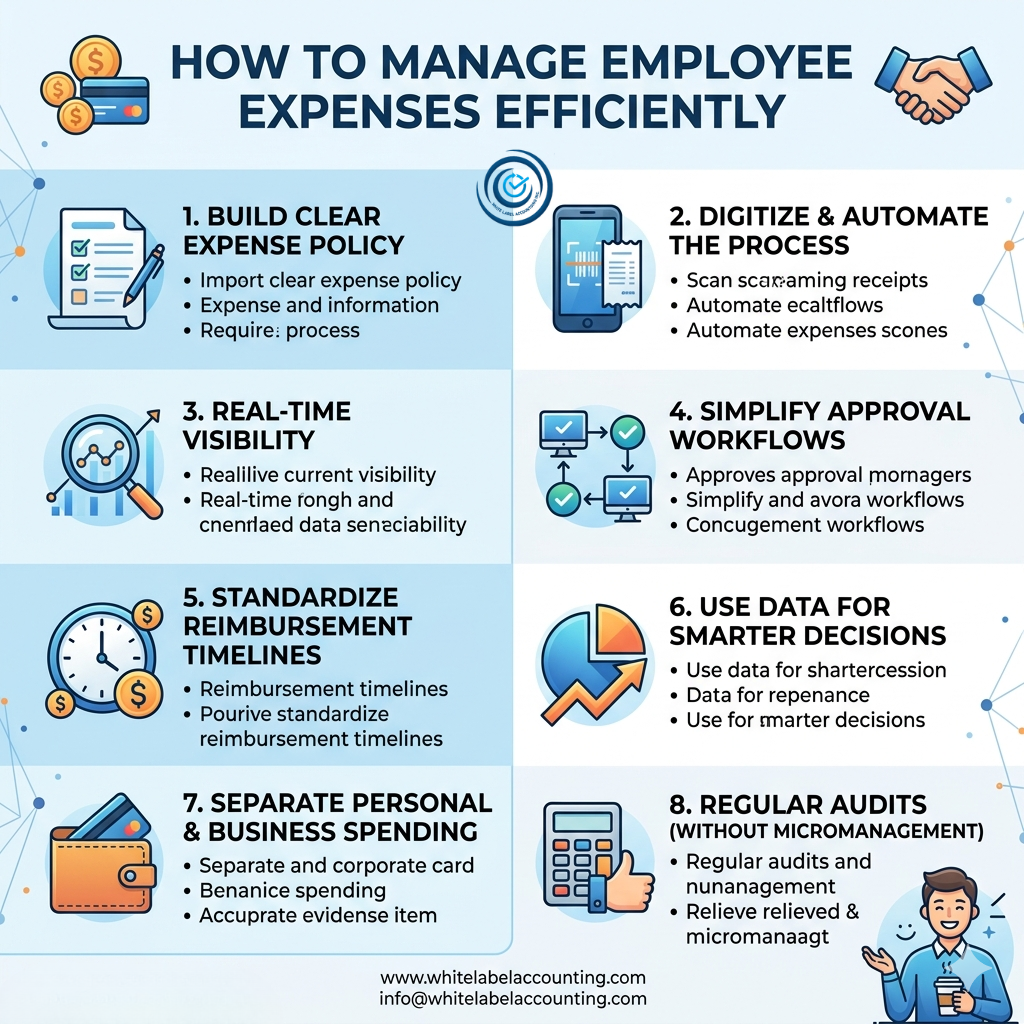
A vague policy creates confusion. An overly strict one creates frustration. The key is clarity with flexibility.
A strong expense policy should:
Define what qualifies as a business expense
Set spending limits by role or department
Outline submission timelines and approval workflows
When employees know the rules upfront, compliance becomes effortless rather than enforced.
Manual expense tracking is slow and error-prone. Lost receipts, incorrect entries, and delayed approvals can disrupt both accounting and employee satisfaction.
Modern businesses are shifting to digital systems that:
Allow employees to upload receipts instantly
Automatically categorize expenses
Integrate with accounting platforms
Automation reduces human error and speeds up the entire reimbursement cycle.
One of the biggest inefficiencies in expense management is delayed insight. By the time reports are reviewed, the money is already spent.
Real-time tracking allows businesses to:
Monitor spending as it happens
Identify unusual patterns early
Stay within budget without micromanaging
This proactive approach prevents overspending instead of reacting to it.
Complex approval chains slow everything down. When reimbursements take weeks, employee morale drops.
Efficient systems use:
Tiered approvals based on expense value
Automated routing to the right managers
Notifications to avoid bottlenecks
The goal is speed without losing control.
Unpredictable reimbursements create frustration and distrust. Employees shouldn’t feel like they’re financing company operations.
Set clear expectations:
Weekly or bi-weekly reimbursement cycles
Defined processing times
Transparent status tracking
Consistency builds confidence and keeps teams motivated.
Expense data is often underutilized. Beyond accounting, it can reveal trends that impact profitability.
Analyzing expense data helps:
Identify cost-saving opportunities
Negotiate better vendor deals
Optimize travel and operational budgets
What looks like small expenses individually can reveal major insights collectively.
Blurring the line between personal and business expenses leads to accounting complications and compliance risks.
Providing employees with:
Corporate cards or prepaid expense cards
Clear reimbursement categories
ensures clean financial records and easier audits.
Auditing expenses doesn’t mean questioning every claim—it’s about maintaining accountability.
A balanced approach includes:
Random checks instead of constant scrutiny
Automated flagging of unusual expenses
Periodic policy reviews
This keeps systems fair, transparent, and efficient.
Poor expense management quietly impacts cash flow, productivity, and employee satisfaction. Efficient systems, on the other hand, create a ripple effect:
Finance teams save time
Employees feel valued and reimbursed quickly
Leadership gains better financial control
It’s not just about tracking money—it’s about managing it intelligently.
Efficient employee expense management is a blend of smart policies, modern tools, and a people-first approach. Businesses that invest in streamlining this process don’t just reduce costs—they create smoother operations and stronger internal trust.
At www.whitelabelaccounting.com, we help firms transform everyday financial processes into scalable, efficient systems that support growth without complexity.

Copyright © 2025 White Label Accounting Inc. All Rights Reserved | Developed by WITH U Technology Pvt. Ltd.