Selling online has never been easier — but managing sales tax has never been more complicated.
As eCommerce continues to grow across global markets, businesses are reaching customers in multiple states, regions, and countries within minutes. While this digital expansion creates new revenue opportunities, it also introduces a major challenge: handling sales tax correctly for online transactions.
For many online businesses, sales tax compliance becomes difficult not because of the tax itself, but because regulations constantly evolve. Different locations apply different tax rates, filing rules, product exemptions, and reporting requirements. Without a structured process, even small errors can create financial and compliance risks.
In today’s digital economy, tax authorities are paying closer attention to online transactions. Governments worldwide have strengthened regulations requiring online sellers to collect and remit taxes accurately.
This means businesses can no longer rely on outdated tax methods or manual spreadsheets. Whether selling through:
eCommerce websites,
online marketplaces,
subscription platforms,
or social commerce channels,
businesses need a scalable tax management strategy.
Ignoring sales tax responsibilities can result in:
penalties,
audits,
interest charges,
and damaged business credibility.
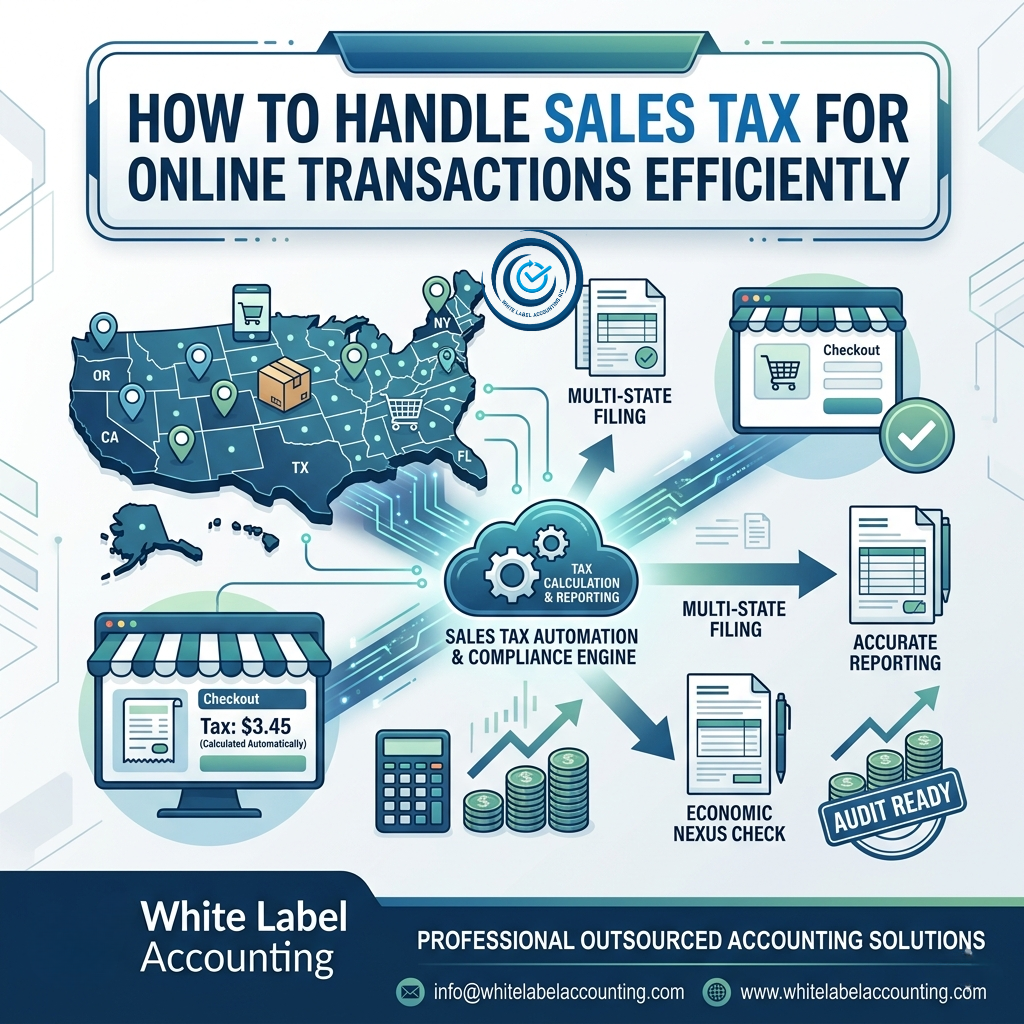
One of the first steps in handling online sales tax is understanding where your business creates tax liability.
This is commonly known as “economic nexus.” A business may be required to collect tax in a state or region if it exceeds:
a certain sales threshold,
transaction volume,
or marketplace activity level.
Even businesses without a physical office may still have tax responsibilities based solely on online sales activity.
Monitoring these thresholds regularly is essential for maintaining compliance as your business grows.
Strong financial organization simplifies every aspect of sales tax management.
Businesses should maintain clear records of:
customer billing locations,
taxable products and services,
shipping charges,
refunds and returns,
and tax-exempt transactions.
Accurate records improve reporting accuracy and reduce stress during audits or tax filing periods.
Manually tracking tax rates across different jurisdictions is time-consuming and risky. Modern accounting systems and eCommerce platforms now offer automation tools that calculate taxes in real time based on customer location.
Automation can help businesses:
apply correct tax rates,
generate tax reports,
track filing obligations,
and reduce human errors.
Integrated accounting solutions also improve efficiency by syncing sales data directly from online stores and payment platforms.
One common mistake among growing online businesses is mixing collected sales tax with operational income.
Sales tax collected from customers belongs to tax authorities and should be recorded separately as a liability. Maintaining separate tracking helps businesses:
improve cash flow visibility,
avoid reporting mistakes,
and prevent unexpected shortages during tax payments.
Clear financial separation creates more accurate financial statements and stronger bookkeeping practices.
Many marketplaces now collect taxes on behalf of sellers under marketplace facilitator laws. However, businesses should still review marketplace reports carefully.
Some transactions may still require direct reporting depending on:
business structure,
product type,
or regional regulations.
Regular reconciliations ensure tax reports remain accurate across all selling channels.
As online businesses expand, filing obligations often increase. Different jurisdictions may require:
monthly filings,
quarterly submissions,
or annual reports.
Missing deadlines can quickly create avoidable penalties.
Creating a compliance calendar and reviewing filing schedules regularly helps businesses stay organized throughout the year.
Managing online sales tax internally can become overwhelming as transaction volumes grow. Many businesses now partner with outsourced accounting professionals to improve compliance and reduce administrative workload.
Professional accounting support can assist with:
sales tax tracking,
filing preparation,
reconciliation,
audit readiness,
and automated reporting systems.
This allows business owners to focus on scaling operations instead of navigating complex tax regulations alone.
Businesses that handle sales tax proactively often operate with stronger financial systems overall. Organized accounting processes improve:
operational efficiency,
reporting accuracy,
financial transparency,
and long-term scalability.
Instead of viewing sales tax as just another obligation, successful online businesses treat compliance as part of sustainable growth strategy.
As digital commerce continues evolving, having a reliable accounting and tax management process is essential for staying competitive and financially secure.
For businesses seeking modern accounting and bookkeeping support, White Label Accounting provides professional outsourced accounting solutions designed to help online businesses simplify compliance, improve reporting accuracy, and scale with confidence.


Copyright © 2025 White Label Accounting Inc. All Rights Reserved | Developed by WITH U Technology Pvt. Ltd.