.png)
Bank reconciliations—commonly known as bank recs—are a critical part of maintaining accurate and reliable financial records. Whether you’re a business owner, accountant, or financial manager, learning how to do a bank reconciliation properly ensures your internal books match your bank statements. This helps prevent errors, fraud, and costly misstatements.
In this guide, you’ll learn:
? What a bank reconciliation is
? Why it’s essential for your business
? Step-by-step instructions on how to do a bank rec
? Common mistakes to avoid
? How White Label Accounting can simplify the entire process
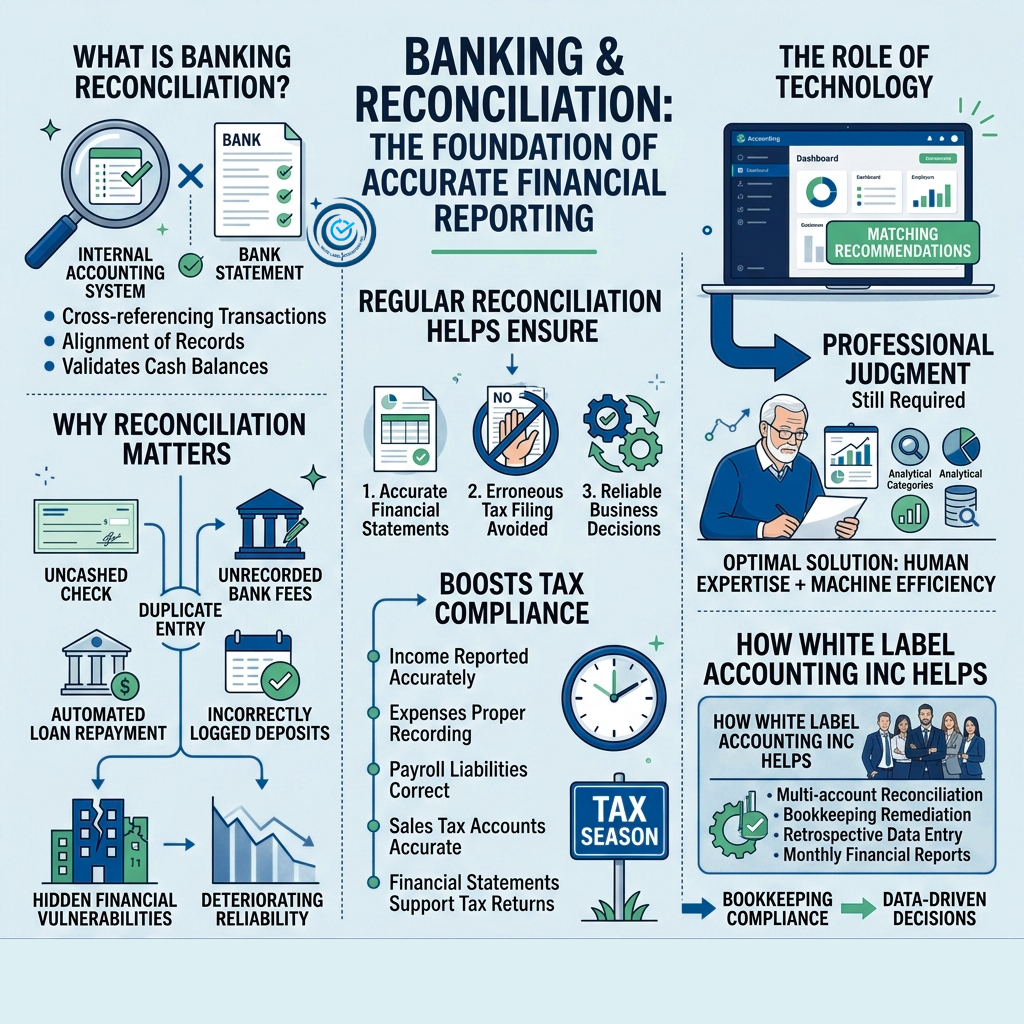
A bank reconciliation is the process of comparing your company’s internal financial records with your bank’s statement to ensure both balances match.
Regular bank reconciliations help identify:
Missing or duplicated transactions
Unauthorized withdrawals
Bank posting errors
Internal bookkeeping mistakes
Bank reconciliation is essential for maintaining financial clarity and protecting your business.
Ensures your books reflect your true cash position.
Frequent reconciliation helps spot suspicious activity early.
Knowing your exact balance supports better budgeting and payment planning.
Accurate records strengthen tax compliance, audits, and investor confidence.
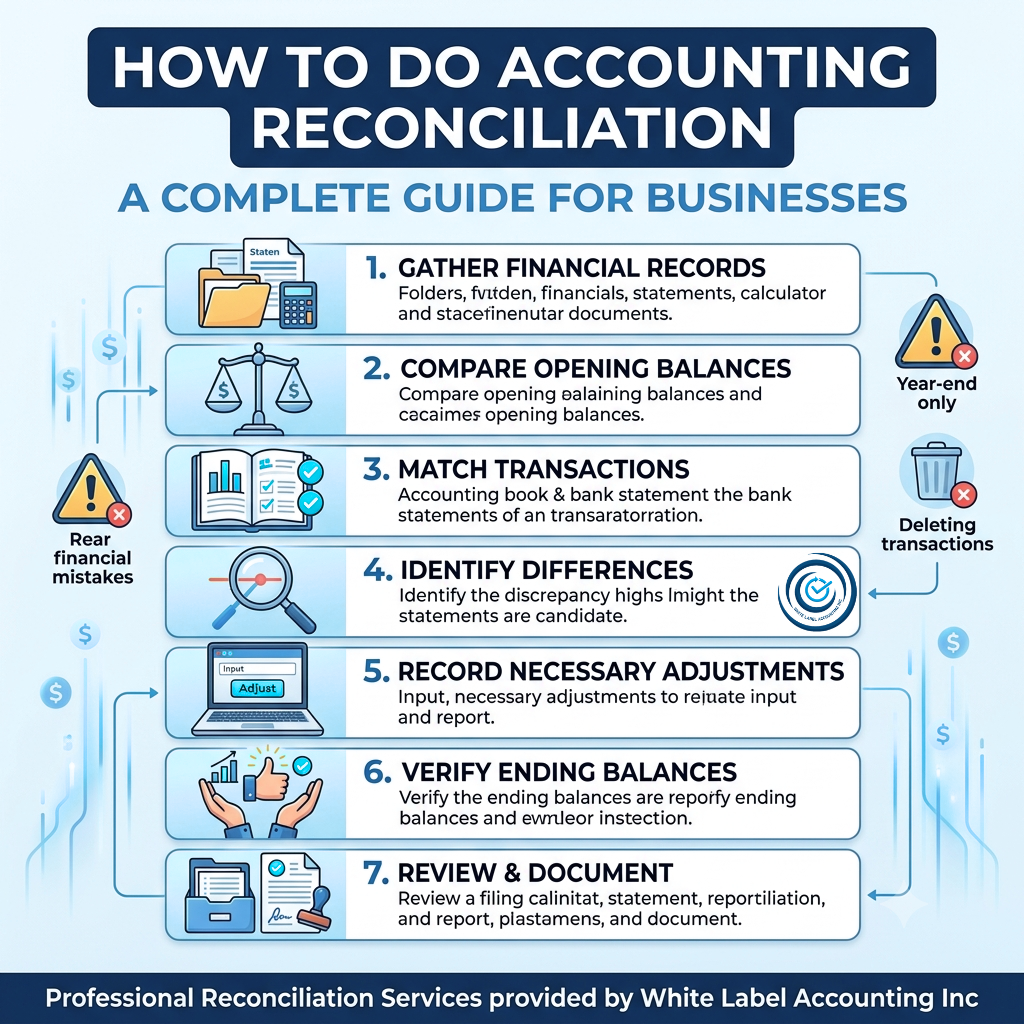
Gather:
Latest bank statement
Accounting ledger or software records
Outstanding checks, deposit slips, and transaction confirmations
Ensure your book’s opening balance matches the bank statement opening balance. If not, locate and correct the difference first.
Compare deposits, withdrawals, checks, and fees line by line. Mark each matched transaction as cleared.
Look for:
Checks issued but not yet cleared
Deposits in transit
Bank fees or interest not recorded in your books
Record these as outstanding items and update your ledger.
After adjustments, your adjusted book balance should match the bank’s ending balance. If not, recheck for:
Data entry errors
Duplicates
Missing transactions
? Not reconciling regularly – Always reconcile monthly
? Ignoring small differences – Minor errors compound over time
? Poor record-keeping – Incomplete data complicates reconciliation
? Not using accounting software – Automation reduces errors and saves time
While knowing how to do a bank rec is essential, it can be time-consuming—especially as transaction volumes grow. That’s where White Label Accounting adds real value:
? Expertise – Skilled professionals experienced in bank reconciliations and all major accounting software
? Efficiency – Faster, smoother reconciliation processes
? Error Reduction – Minimized risks and audit-ready financials
? Scalable Support – Ideal for businesses, CPAs, and accounting firms
Ready to simplify your financial management?
White Label Accounting ensures your bank reconciliations are accurate, timely, and stress-free—so you can focus on business growth with confidence.
Knowing how to do a bank reconciliation is a vital skill for any business owner or finance professional. By following a structured process and partnering with experts like White Label Accounting, you can maintain accurate financial records, reduce fraud risks, and build a stronger financial foundation for your business.



Copyright © 2025 White Label Accounting Inc. All Rights Reserved | Developed by WITH U Technology Pvt. Ltd.