Accuracy in accounting refers to the precise recording, classification, and reporting of financial transactions so that financial statements reflect a business’s true financial position. It is critical for decision-making, tax compliance, financial planning, and long-term growth.
Errors in accounting can lead to financial losses, compliance issues, and poor business decisions. Accurate accounting ensures that financial data is complete, reliable, and free from errors—building stakeholder confidence, supporting regulatory compliance, and helping businesses avoid penalties or audits.
Maintaining accuracy requires a structured approach, strict internal controls, and the use of modern accounting tools. Key practices include:
Implement a Robust Accounting System
Use reliable accounting software like QuickBooks, Xero, or Sage to automate calculations, reduce errors, and record data in real time.
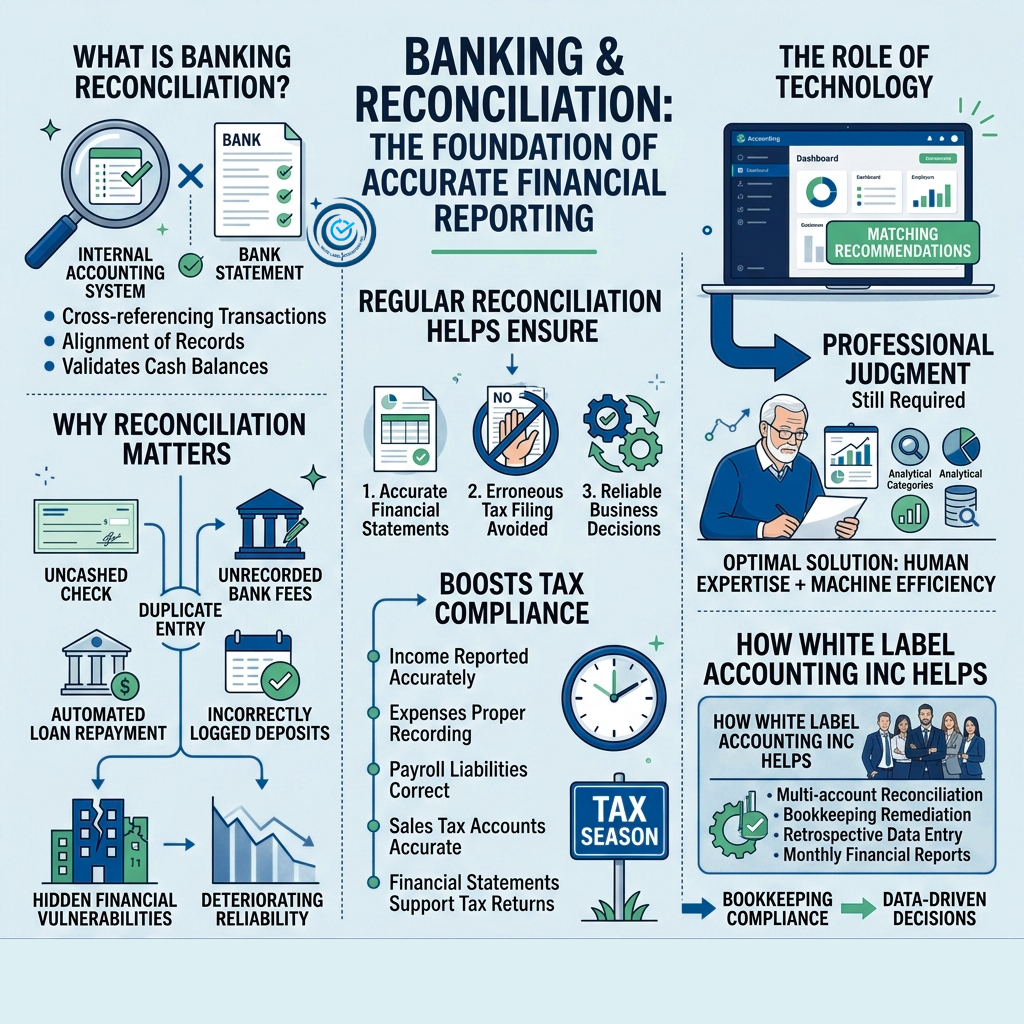
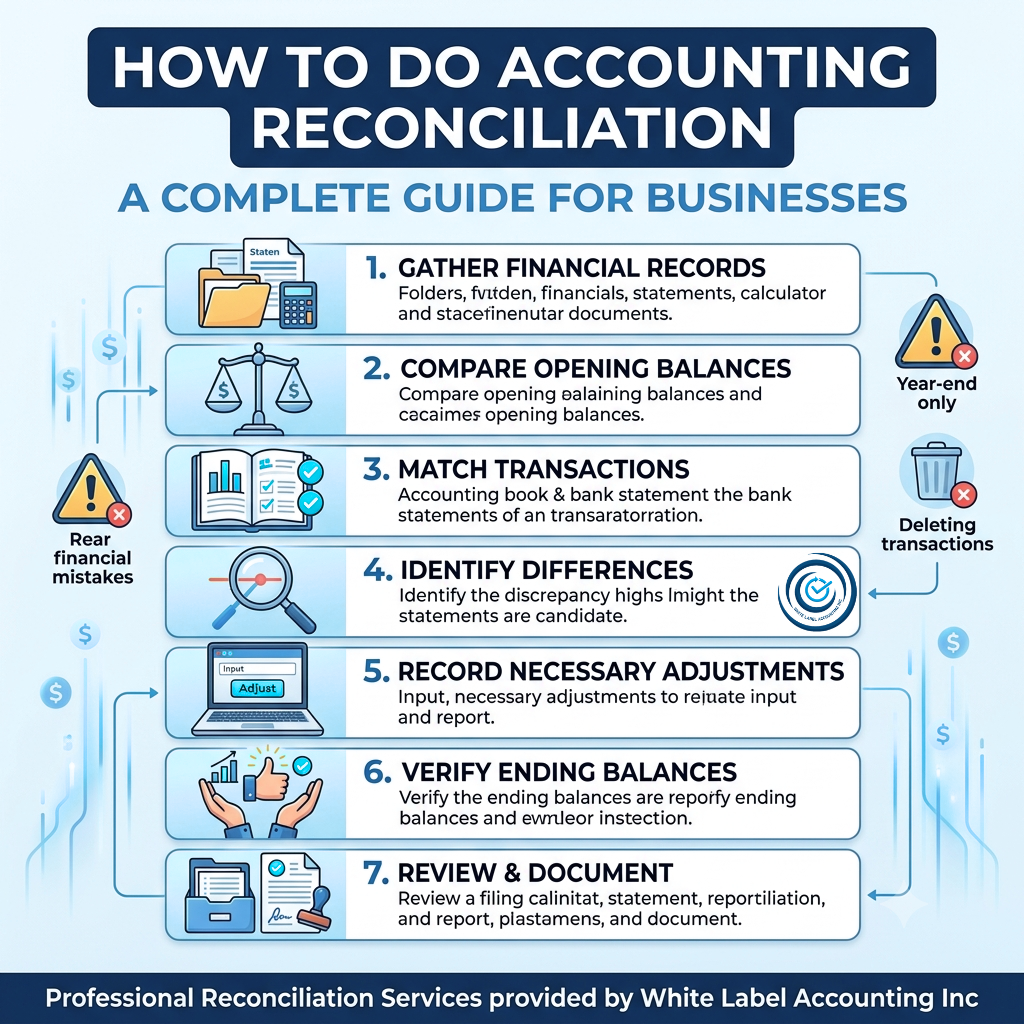
Regular Bank Reconciliation
Match internal financial records with bank statements to prevent discrepancies and detect fraud.
Maintain Proper Documentation
Back every transaction with receipts, invoices, and contracts for traceability and accuracy.
Standardize Accounting Procedures
SOPs for transaction recording, reconciliations, and reporting ensure consistency.
Conduct Periodic Audits and Reviews
Internal audits catch errors early, while external audits ensure compliance with standards.
Train Accounting Staff
Continuous education on tax rules, accounting standards, and software reduces mistakes.
Monitor Financial Statements Regularly
Reviewing balance sheets, income statements, and cash flow reports helps spot errors quickly.
Implement Internal Controls
Segregation of duties (e.g., separating bookkeeping, approvals, and payments) prevents fraud.
Even with best practices, businesses often face:
Manual Errors and Data Entry Mistakes
Typos, duplicate entries, and misclassifications distort financial reports.
Lack of Accounting Knowledge
Inexperienced bookkeepers may mishandle expenses or tax rules.
Cash Flow Mismanagement
Poor tracking leads to overdrafts, missed payments, and financial stress.
Tax Compliance Issues
Incorrect filings cause underpayments, overpayments, or penalties.
Reconciliation Delays
Skipping timely reconciliations makes discrepancies harder to resolve.
Poor Financial Reporting
Incomplete or inaccurate reports hinder decision-making and financing opportunities.
Businesses can overcome these challenges by:
Automating Accounting Processes
Cloud-based tools like QuickBooks or Xero minimize manual work and errors.
Routine Reconciliation
Regularly reconcile bank, credit card, and vendor accounts to maintain accuracy.
Hiring or Outsourcing Experts
Engaging professional accountants or outsourcing to White Label Accounting ensures compliance and precision.
Regular Financial Reviews
Monthly or quarterly reviews help detect issues before they escalate.
Strict Internal Controls
Assigning financial responsibilities across staff prevents fraud.
Staying Updated on Tax Laws
Keeping up with evolving tax regulations ensures timely, accurate compliance.
At White Label Accounting, we specialize in maintaining accurate, compliant, and efficient financial management for businesses of all sizes. Our services include:
Bookkeeping & Record-Keeping – Precise transaction categorization and cash flow tracking.
Bank & Credit Card Reconciliation – Eliminating discrepancies with timely reconciliations.
Financial Statement Preparation – Clear and accurate income statements, balance sheets, and cash flow reports.
Sales Tax & Payroll Tax Compliance – Expert handling of tax filings to avoid penalties.
Expense & Invoice Management – Smooth management of bills, vendor payments, and receivables.
Tax Planning & Filing – Accurate tax preparation, deductions, and timely filing.
Customized Financial Reporting – Insightful reports to support informed decision-making.
Accuracy in accounting is essential for financial stability, compliance, and strategic decision-making. Whether you’re running a small business or a large company, precision in financial records requires structured systems, automation, and expert guidance.
By partnering with White Label Accounting, you can ensure your accounting remains error-free, compliant, and optimized for growth. From bookkeeping and tax filings to reconciliations and reporting, our experts keep your finances precise and reliable.
Contact White Label Accounting today to streamline your accounting processes and achieve financial accuracy with professional support.

Copyright © 2025 White Label Accounting Inc. All Rights Reserved | Developed by WITH U Technology Pvt. Ltd.