In the world of finance, accuracy is everything. Businesses rely on financial reports to make strategic decisions, maintain compliance, and build trust with stakeholders. However, even small discrepancies in financial data can lead to misleading reports and costly mistakes.
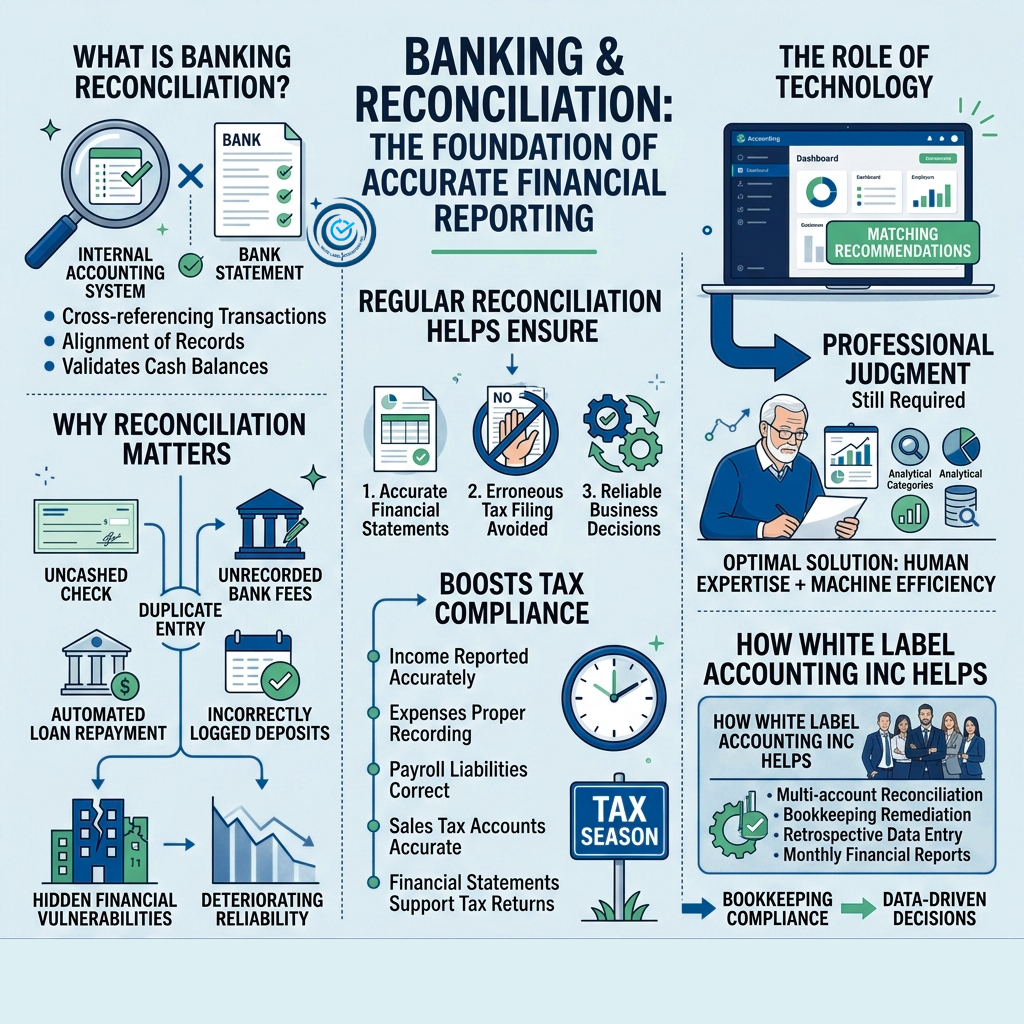
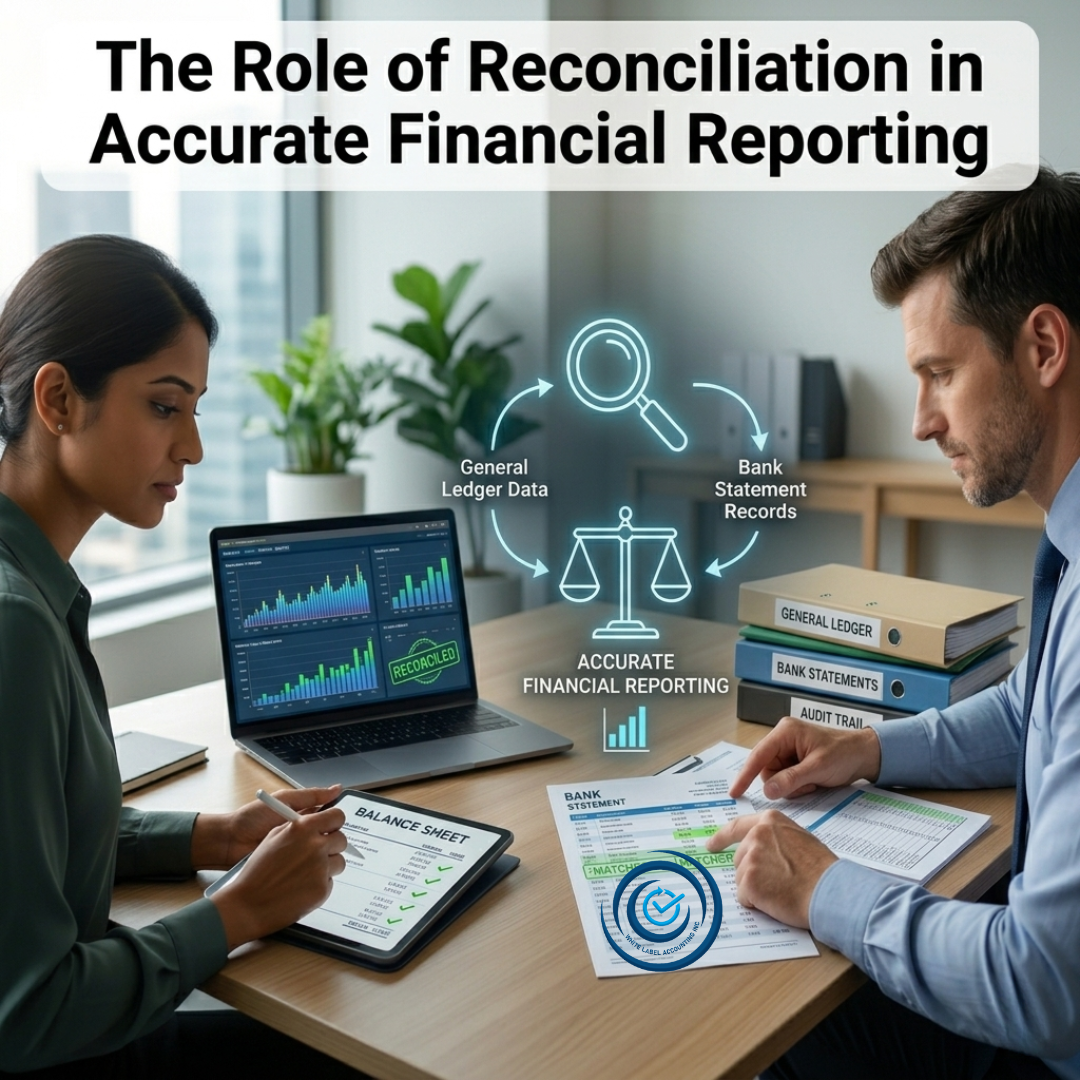
This is where reconciliation becomes essential. Reconciliation ensures that financial records match supporting documents such as bank statements, invoices, and internal ledgers. It acts as a financial checkpoint that validates the accuracy and integrity of accounting data.
At White Label Accounting, reconciliation is viewed not just as a routine accounting task but as a critical safeguard for reliable financial reporting.
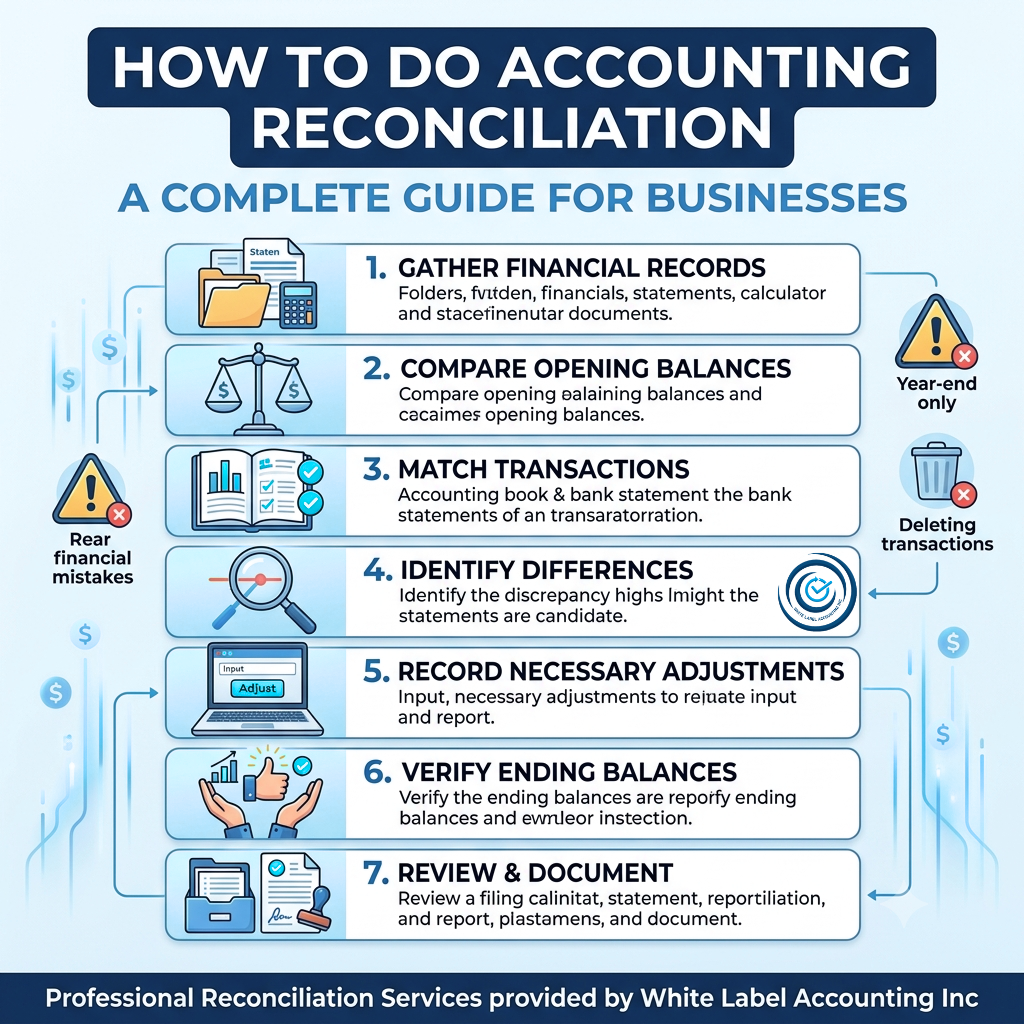
Financial reconciliation is the process of comparing two sets of financial records to ensure they are consistent and accurate. If differences are found, they are investigated and corrected.
Common types of reconciliation include:
Bank Reconciliation – Matching company records with bank statements
Accounts Receivable Reconciliation – Verifying customer payments and outstanding invoices
Accounts Payable Reconciliation – Confirming vendor balances and payments
General Ledger Reconciliation – Ensuring ledger balances align with supporting data
Each of these plays a vital role in maintaining clean and dependable financial records.
1. Ensures Data Accuracy
Financial reports such as profit and loss statements and balance sheets depend on accurate underlying data. Reconciliation helps identify errors like:
Duplicate entries
Missing transactions
Incorrect amounts
Misclassified expenses
Correcting these discrepancies ensures financial reports reflect the true financial position of the business.
2. Detects Fraud and Financial Irregularities
Reconciliation acts as a built-in control mechanism. By regularly comparing records, businesses can quickly detect unusual transactions or unauthorized activity.
Early detection helps prevent larger financial risks and protects company assets.
3. Strengthens Financial Transparency
Investors, stakeholders, and regulatory authorities rely on trustworthy financial statements. Consistent reconciliation builds transparency by ensuring that every reported figure is supported by verified records.
This transparency enhances credibility and confidence in the organization’s financial reporting.
4. Supports Regulatory Compliance
Many industries require accurate financial records to comply with tax regulations and accounting standards. Regular reconciliation helps businesses maintain proper documentation and remain compliant with reporting requirements.
This reduces the risk of penalties, audits, and financial misstatements.
5. Improves Decision-Making
Reliable financial data allows business leaders to make informed decisions. Without reconciliation, financial reports may contain inaccuracies that could mislead management.
With reconciled records, organizations can confidently analyze:
Cash flow trends
Profitability
Operational expenses
Business growth opportunities
To maintain accurate financial reporting, businesses should adopt structured reconciliation processes.
Perform Reconciliation Regularly
Monthly or even weekly reconciliation ensures discrepancies are detected early.
Automate Where Possible
Modern accounting tools can automate parts of the reconciliation process, reducing manual effort and minimizing errors.
Maintain Clear Documentation
Keep organized records of bank statements, receipts, invoices, and transaction reports.
Assign Responsibility
Designate trained accounting professionals to manage and review reconciliation activities.
Review Financial Statements After Reconciliation
Once reconciliation is completed, verify that financial reports reflect the corrected data.
As businesses grow, reconciliation can become increasingly complex. Managing multiple accounts, payment systems, and financial transactions requires time and expertise.
Professional accounting support ensures that reconciliation processes are:
Accurate
Timely
Compliant with accounting standards
Efficiently integrated with financial reporting
At White Label Accounting, reconciliation services help accounting firms and businesses maintain clean financial records while focusing on delivering strategic financial insights.
Final Thoughts
Reconciliation may operate behind the scenes, but its impact on financial reporting is significant. By validating financial records and resolving discrepancies, reconciliation ensures that financial statements remain accurate, transparent, and reliable.
For businesses and accounting firms alike, strong reconciliation practices are the foundation of trustworthy financial reporting and long-term financial stability.



Copyright © 2025 White Label Accounting Inc. All Rights Reserved | Developed by WITH U Technology Pvt. Ltd.