In a world where financial decisions are made in real time, accuracy is everything. Yet, many businesses unknowingly operate on numbers that don’t fully reflect reality. The gap between recorded transactions and actual financial activity can quietly grow—until it turns into a costly problem.
This is where regular reconciliations step in. More than just a routine accounting task, reconciliation is a powerful practice that keeps your financial data clean, reliable, and decision-ready.
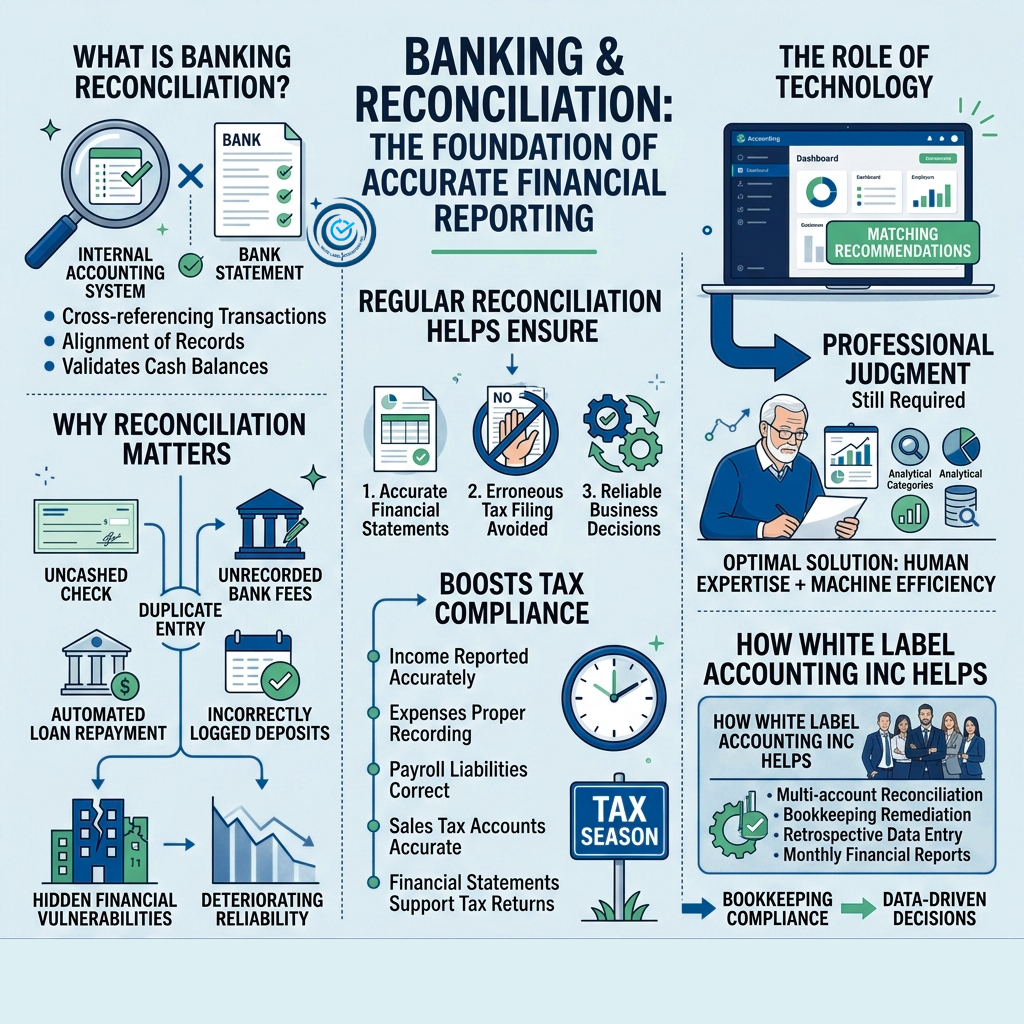
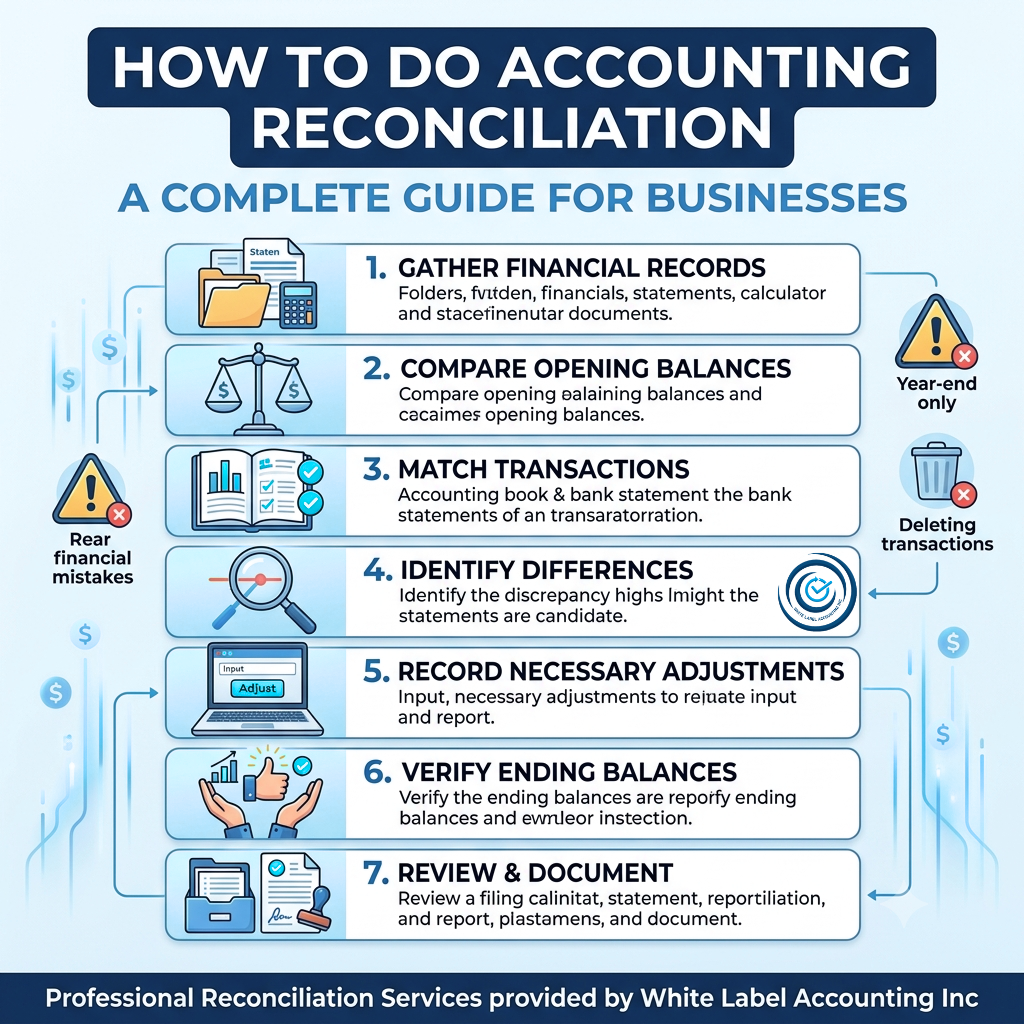
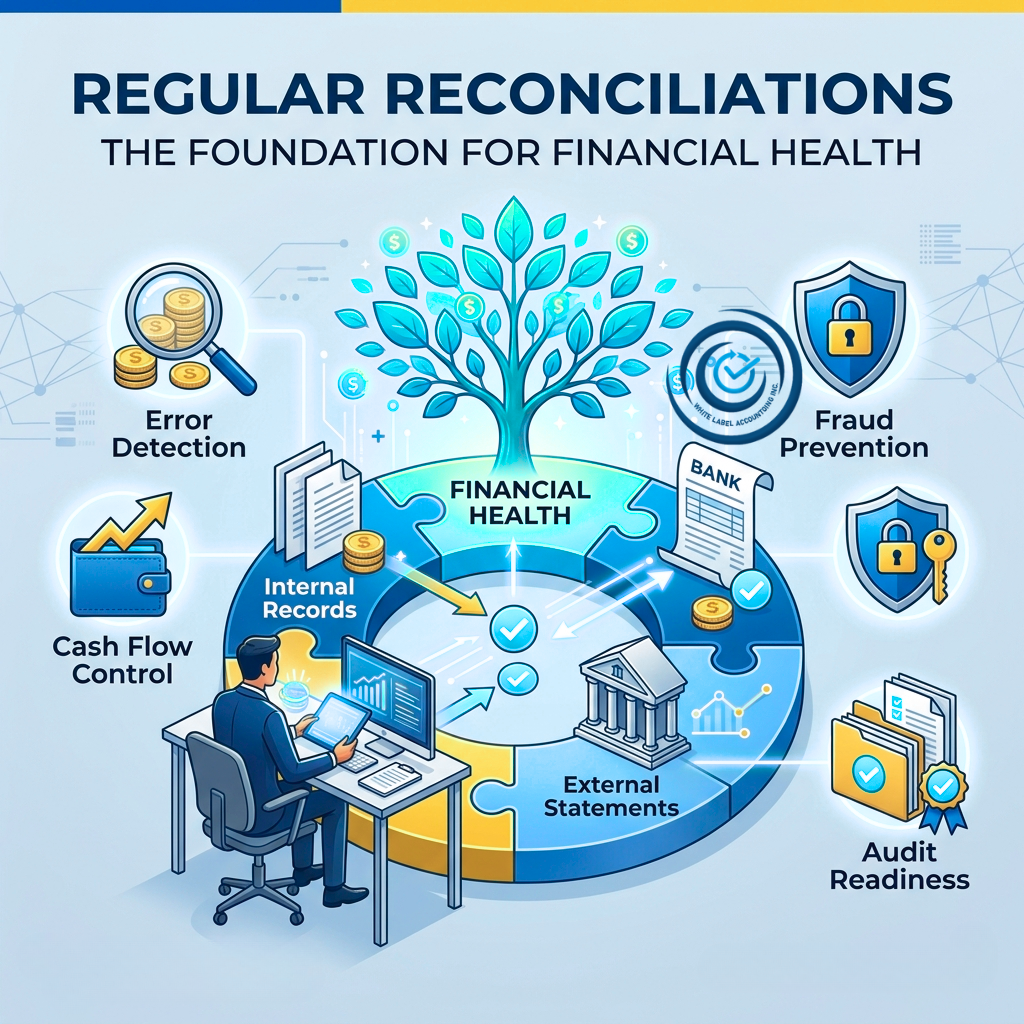
Reconciliation is the process of comparing your internal financial records with external statements—such as bank accounts, credit cards, or payment platforms—to ensure everything matches perfectly.
Think of it as a financial “reality check.” It confirms that every transaction is accounted for and that your books tell the true story of your business.
Even small errors—duplicate entries, missed transactions, or incorrect amounts—can distort your financial picture. Without regular reconciliation, these issues accumulate over time.
Consistent reconciliation helps you:
Detect discrepancies early
Correct errors before they grow
Maintain accurate financial records
This proactive approach saves time and prevents major clean-up efforts later.
Cash flow is the heartbeat of any business. Regular reconciliations ensure you always know exactly how much cash is available.
By reconciling frequently, you can:
Identify unrecorded payments or expenses
Avoid overdrafts or cash shortages
Track incoming and outgoing funds with confidence
This level of control allows for smarter budgeting and financial planning.
Decisions are only as good as the data behind them. When your books are regularly reconciled, you can trust your numbers.
Accurate data empowers you to:
Make informed strategic decisions
Evaluate business performance effectively
Present reliable reports to stakeholders
Whether you're planning expansion or managing daily operations, reliable financial data is essential.
One of the often-overlooked benefits of reconciliation is its role in safeguarding your business. Regular reviews make it easier to spot unusual or unauthorized transactions.
With frequent reconciliation:
Suspicious activity is identified quickly
Financial risks are minimized
Internal controls are strengthened
It’s not just about accuracy—it’s about protection.
Audits and compliance checks can be stressful, especially when records are inconsistent. Regular reconciliations ensure your books are always audit-ready.
This means:
Organized and verified financial records
Reduced risk of compliance issues
Faster and smoother audit processes
Staying prepared year-round eliminates last-minute panic.
It may seem counterintuitive, but doing reconciliations regularly actually saves time. Instead of dealing with months of discrepancies at once, you handle small issues as they arise.
This results in:
Lower accounting costs
Less time spent on corrections
Improved operational efficiency
Consistency turns a complex task into a manageable routine.
Today’s businesses need more than basic bookkeeping—they need financial clarity, control, and confidence. Regular reconciliations are a cornerstone of this modern approach.
At White Label Accounting, we believe that strong financial health starts with accurate, real-time data. By integrating regular reconciliation into your workflow, you’re not just maintaining your books—you’re building a resilient financial foundation for long-term success.


Copyright © 2025 White Label Accounting Inc. All Rights Reserved | Developed by WITH U Technology Pvt. Ltd.