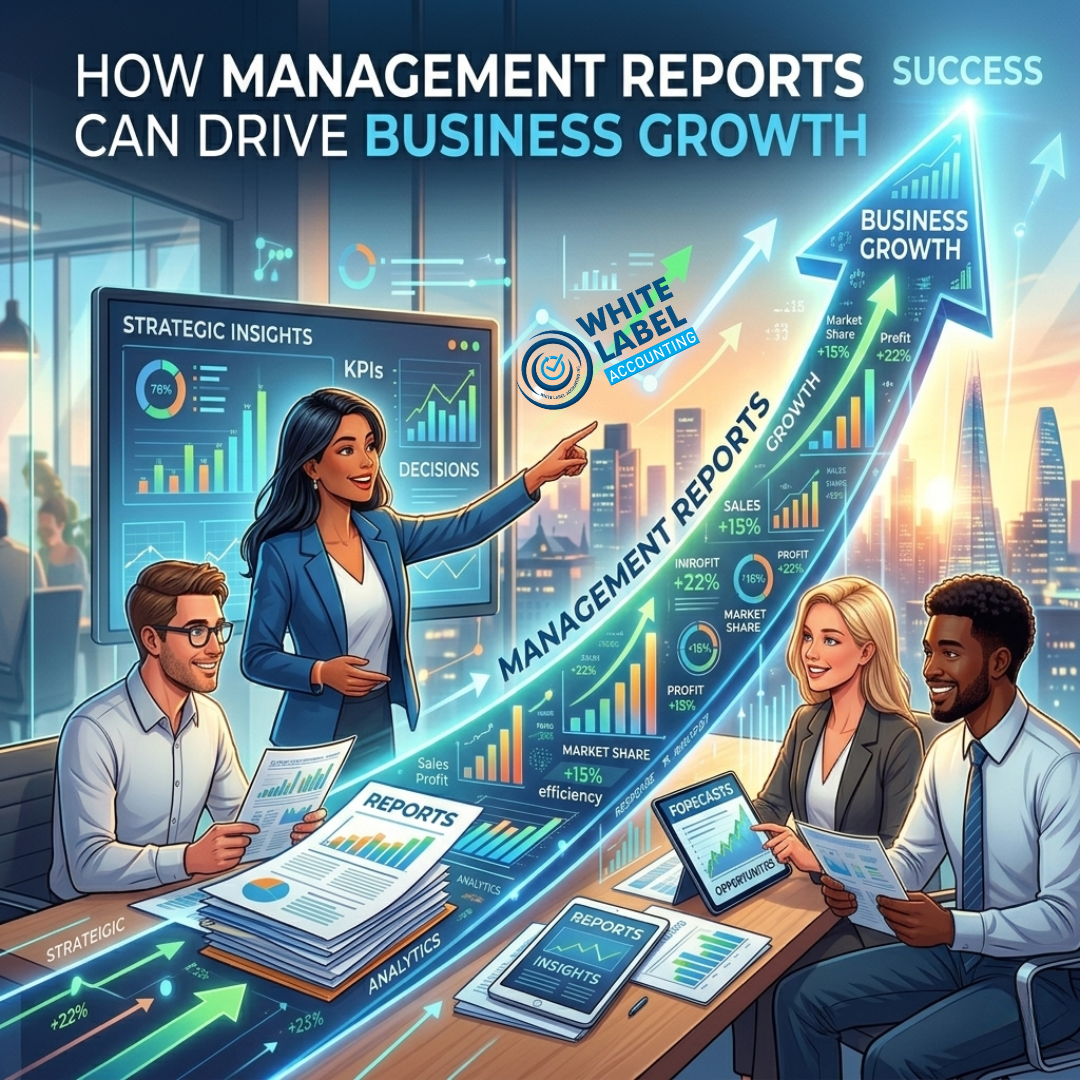
In the modern business landscape, data is no longer just a by-product of operations—it is one of the most valuable strategic assets an organization possesses. However, raw data alone does not lead to growth. What truly drives business performance is the ability to interpret, organize, and use data effectively. This is where management reports play a vital role.
Management reports transform complex financial and operational data into clear, actionable insights that help business leaders make informed decisions. For growing companies and accounting firms, these reports serve as a roadmap for improving performance, controlling costs, and identifying new opportunities.
For organizations looking to scale efficiently, management reporting is not just a financial exercise—it’s a powerful growth tool.
Management reports are structured financial and operational reports designed specifically for internal decision-making. Unlike statutory financial reports prepared for regulatory compliance, management reports focus on providing insights that help business leaders understand performance and guide strategy.
These reports typically include:
Profit and loss analysis
Revenue trends and forecasts
Expense breakdowns
Cash flow insights
Key performance indicators (KPIs)
Departmental performance summaries
By presenting this information clearly and consistently, management reports help leadership teams quickly evaluate the health of the business.
Successful companies rely on accurate and timely reporting to guide their strategies. Without proper reporting systems, businesses often rely on assumptions rather than data.
Here’s why management reports are essential for growth.
1. Better Strategic Decision-Making
Management reports provide a clear overview of financial performance, helping executives identify strengths and weaknesses within the organization.
With detailed insights into revenue streams, costs, and profitability, leaders can make smarter strategic decisions such as:
Expanding profitable services
Reducing unnecessary expenses
Investing in high-performing departments
Adjusting pricing strategies
When decisions are based on accurate reporting rather than guesswork, the likelihood of sustainable growth increases significantly.
One of the biggest challenges for growing businesses is lack of financial visibility. Management reports consolidate financial data into organized summaries that make it easier to understand where the business stands.
For example, monthly financial dashboards can show:
Revenue growth trends
Profit margins
Operational costs
Budget vs actual performance
With this information readily available, businesses can quickly detect financial issues and respond proactively.
Management reports often reveal patterns that may not be obvious through day-to-day operations.
By analyzing financial data regularly, businesses can discover:
High-performing products or services
Emerging customer trends
Seasonal revenue fluctuations
Underperforming departments
These insights allow companies to allocate resources more effectively and focus on areas with the highest growth potential.
Growth requires careful planning, and accurate forecasting plays a crucial role in that process.
Management reports provide historical data that helps businesses create realistic financial projections. By analyzing past trends and performance indicators, organizations can develop budgets and forecasts that support sustainable expansion.
This helps companies:
Plan hiring strategies
Control operating expenses
Manage cash flow effectively
Prepare for future investments
When management reports include departmental performance metrics, they create transparency within the organization.
Department leaders can clearly see:
Their contribution to overall revenue
Budget performance
Efficiency levels
Key operational metrics
This visibility encourages accountability and motivates teams to improve performance, which ultimately contributes to overall business growth.
Cash flow is one of the most critical factors affecting business sustainability. Even profitable companies can struggle if cash flow is poorly managed.
Management reports that track cash inflows and outflows allow leadership teams to:
Monitor liquidity levels
Identify payment delays
Manage vendor payments effectively
Ensure operational stability
Effective cash flow monitoring helps businesses maintain financial health while pursuing growth opportunities.
To maximize the benefits of management reporting, businesses should implement several essential report types.
Financial Performance Reports
These reports summarize revenue, expenses, and profitability to provide a snapshot of overall financial performance.
Budget vs Actual Reports
These reports compare planned budgets with actual spending to identify variances and improve financial discipline.
Cash Flow Reports
Cash flow reports help businesses monitor liquidity and ensure they have sufficient funds to support operations.
KPI Dashboards
Key performance indicators highlight metrics such as revenue growth, customer acquisition, operational efficiency, and productivity.
Departmental Performance Reports
These reports evaluate how individual departments contribute to business objectives.
Together, these reports create a comprehensive view of business performance.
Modern accounting technologies have significantly transformed how businesses generate and use management reports.
Cloud accounting platforms and reporting tools now enable companies to:
Generate real-time financial insights
Automate report generation
Visualize data through dashboards
Integrate multiple business systems
This technological advancement allows organizations to move from static reports to dynamic data-driven decision-making.
For many businesses and accounting firms, preparing detailed management reports internally can be time-consuming and resource-intensive.
This is where white label accounting services can provide significant value.
Outsourced accounting teams can help businesses:
Prepare accurate and timely management reports
Analyze financial performance trends
Provide strategic financial insights
Maintain consistent reporting standards
Support scalable reporting as businesses grow
By leveraging outsourced expertise, companies can focus more on strategy while ensuring their financial data remains accurate and actionable.
In an increasingly competitive business environment, companies cannot rely on intuition alone to make critical decisions. Growth requires clarity, strategy, and reliable financial insights.
Management reports provide the visibility and intelligence needed to guide business decisions, identify opportunities, and maintain financial discipline.
Organizations that prioritize structured reporting gain a significant advantage—they can react faster, plan smarter, and scale more efficiently.
For businesses and accounting firms looking to strengthen financial management and support long-term growth, effective management reporting is not just beneficial—it is essential.


Copyright © 2025 White Label Accounting Inc. All Rights Reserved | Developed by WITH U Technology Pvt. Ltd.