In a business world driven by data, management reports are no longer just routine documents—they are strategic tools that shape decision-making, growth, and long-term success. But the real value of these reports lies in what you measure. Tracking the right financial metrics can turn raw numbers into powerful insights, helping leaders act with confidence and clarity.
So, which numbers truly matter? Let’s explore the key financial metrics every business should monitor to stay competitive, agile, and profitable.
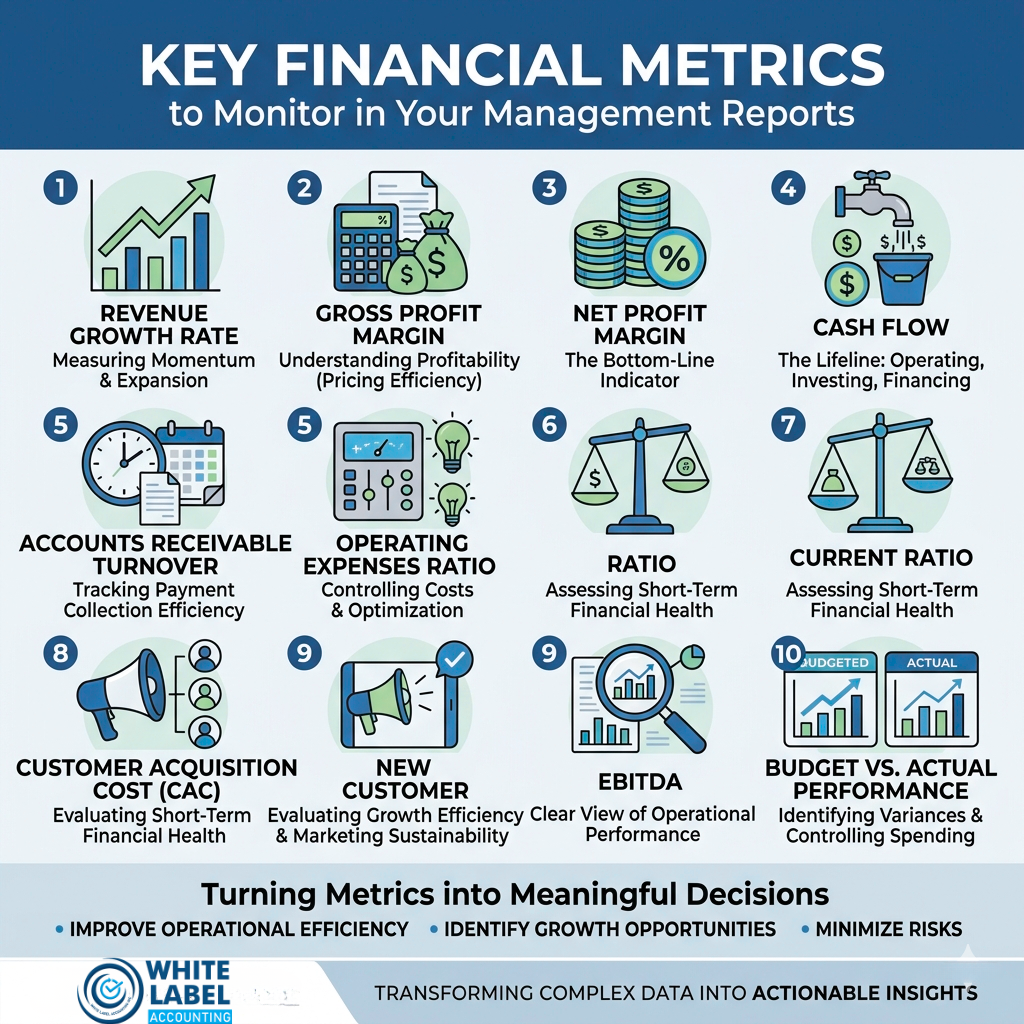
Revenue growth rate is one of the clearest indicators of business performance. It shows how quickly your company is expanding over time.
Why it matters:
It highlights whether your strategies are driving consistent growth or if adjustments are needed. A steady upward trend signals healthy demand and effective operations.
Gross profit margin reveals how much profit your business retains after accounting for the cost of goods or services.
Formula:
(Revenue – Cost of Goods Sold) ÷ Revenue
Why it matters:
It helps identify pricing efficiency and cost control. A declining margin may indicate rising costs or pricing issues that need immediate attention.
While gross margin focuses on production costs, net profit margin takes everything into account—operating expenses, taxes, and interest.
Why it matters:
This metric gives a complete picture of your company’s profitability and financial health.
Profit is important, but cash flow is critical. Positive cash flow ensures your business can meet its obligations, invest in growth, and handle unexpected challenges.
Key focus areas:
Operating cash flow
Investing cash flow
Financing cash flow
Why it matters:
Even profitable businesses can struggle if cash flow is poorly managed.
This metric measures how quickly your customers pay their invoices.
Why it matters:
A higher turnover indicates efficient collections, while a lower ratio may signal delayed payments and potential cash flow issues.
This ratio compares operating expenses to total revenue.
Why it matters:
It helps businesses understand how much they are spending to generate income and where cost optimization is possible.
The current ratio measures your company’s ability to pay short-term liabilities with short-term assets.
Formula:
Current Assets ÷ Current Liabilities
Why it matters:
It ensures your business maintains liquidity and avoids financial strain.
CAC calculates how much it costs to acquire a new customer.
Why it matters:
When compared with customer lifetime value, it reveals whether your marketing and sales efforts are sustainable.
Earnings Before Interest, Taxes, Depreciation, and Amortization (EBITDA) focuses purely on operational profitability.
Why it matters:
It allows businesses to compare performance without the impact of financial and accounting decisions.
This metric compares planned financial performance with actual results.
Why it matters:
It helps identify variances, control spending, and refine future forecasting strategies.
Tracking financial metrics is only half the job—interpreting them effectively is what drives success. Businesses that regularly review and act on these insights can:
Improve operational efficiency
Identify growth opportunities
Minimize financial risks
Make data-driven strategic decisions
At White Label Accounting, we help businesses transform complex financial data into clear, actionable insights. With accurate reporting and expert analysis, your management reports become powerful tools for smarter decision-making.
The right financial metrics act as a compass for your business. Instead of getting lost in endless data, focus on the numbers that truly impact performance and growth. By doing so, you empower your organization to move forward with precision, confidence, and clarity.



Copyright © 2025 White Label Accounting Inc. All Rights Reserved | Developed by WITH U Technology Pvt. Ltd.