Financial reconciliation is one of the most critical yet often overlooked accounting processes. Many businesses postpone reconciliations until tax season or year end, assuming occasional reviews are sufficient. In reality, timely financial reconciliation plays a vital role in maintaining accurate records, preventing errors, and supporting sound business decisions.
This blog explains what financial reconciliation is, why doing it on time matters, common risks of delayed reconciliation, and how professional support from White Label Accounting Inc helps businesses stay financially healthy.
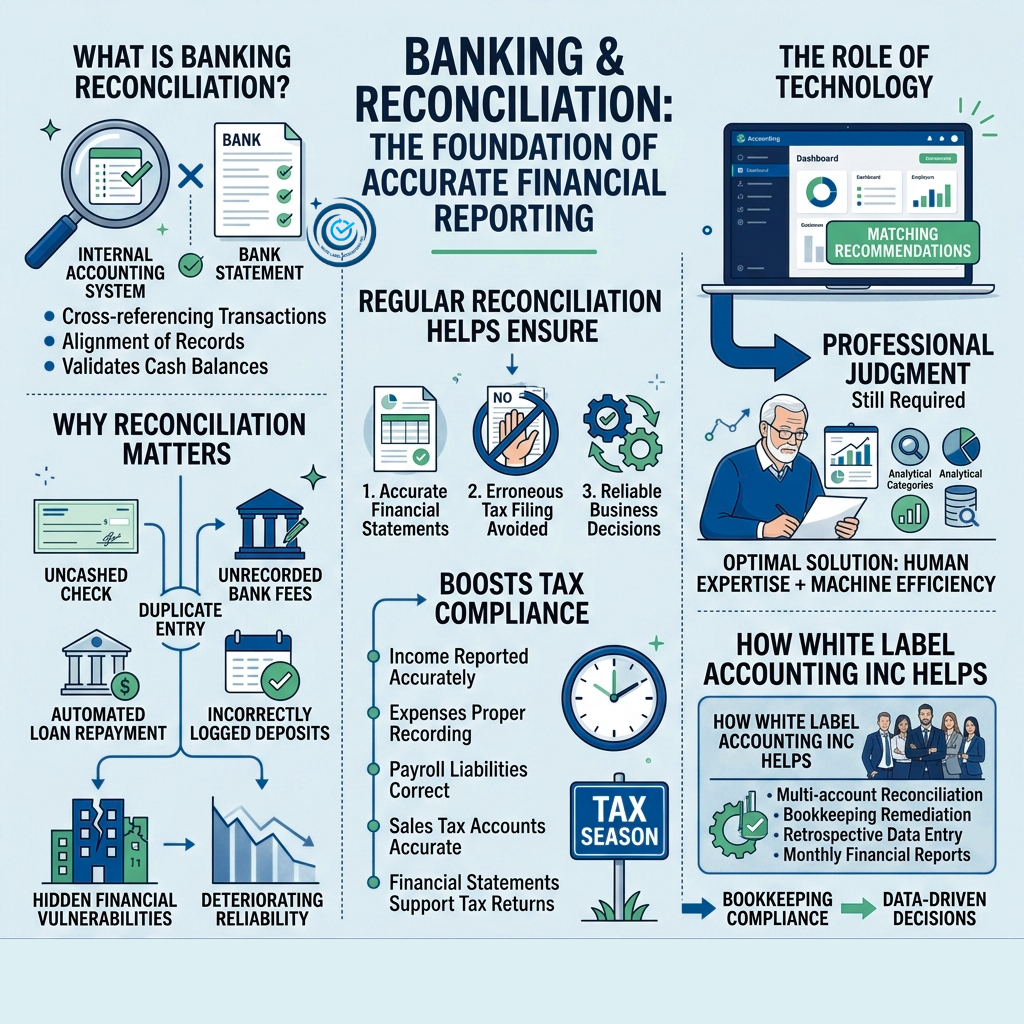
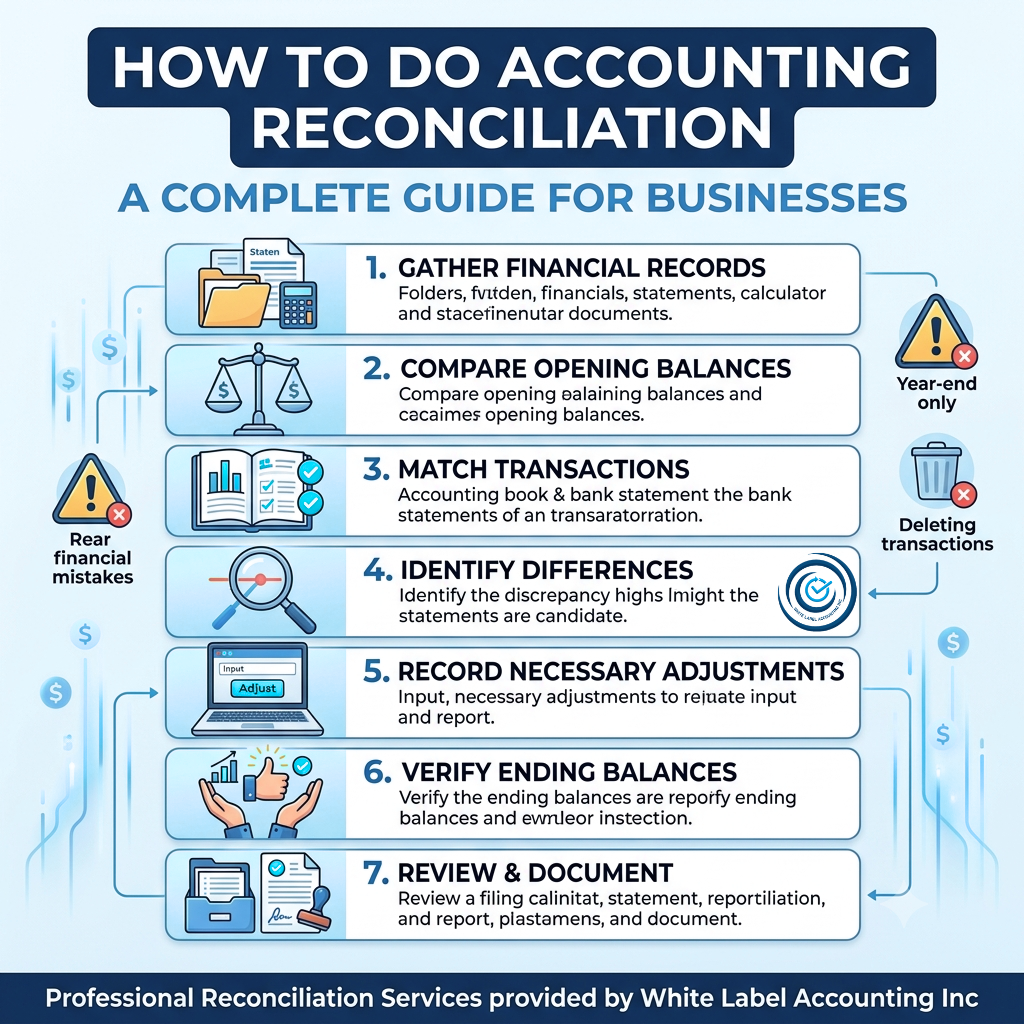
Financial reconciliation is the process of comparing internal accounting records with external financial statements to ensure accuracy and consistency.
Common reconciliations include
Bank account reconciliation
Credit card reconciliation
Accounts receivable reconciliation
Accounts payable reconciliation
Payroll and tax liability reconciliation
The goal is to confirm that recorded transactions match actual financial activity.
Ensures Accurate Financial Records
Reconciling accounts regularly helps identify missing transactions, duplicate entries, and posting errors. Timely reconciliation ensures financial statements reflect the true financial position of the business.
Without reconciliation, reports such as profit and loss and balance sheets may be misleading.
Prevents Errors From Compounding
Small errors can grow into major issues if left unresolved. Timely reconciliation allows businesses to catch and correct mistakes early before they affect multiple periods.
Delayed reconciliation often requires extensive cleanup work and increases the risk of inaccuracies.
Improves Cash Flow Visibility
Reconciling bank and credit card accounts regularly gives businesses a clear understanding of available cash. This helps avoid overdrafts, manage payments effectively, and plan expenses with confidence.
Accurate cash flow data is essential for day to day operations.
Supports Tax Compliance and Filing
Tax returns rely on accurate financial data. Timely reconciliation ensures that income expenses payroll, and tax liabilities are correctly reported.
Unreconciled accounts often lead to estimated tax filings, increased audit risk, penalties, and interest.
Reduces Fraud and Unauthorized Transactions
Regular reconciliation helps detect unusual or unauthorized transactions quickly. Early detection reduces potential losses and strengthens internal controls.
Businesses that delay reconciliation are more vulnerable to fraud going unnoticed.
When reconciliation is postponed, businesses commonly face
Inaccurate financial statements
Cash flow surprises
Missed tax deadlines
Higher professional fees during cleanup
Increased audit and compliance risk
Stress during tax season
Timely reconciliation avoids these issues and supports smoother operations.
Best practice is to reconcile
Bank and credit card accounts monthly
Payroll and tax accounts each pay period or monthly
Receivables and payables regularly
High volume businesses may benefit from weekly reconciliation to maintain control.
Accurate and up to date financial data helps business owners
Make informed decisions
Identify cost saving opportunities
Monitor profitability
Prepare for financing or investment
Plan for growth
Timely reconciliation turns accounting data into a strategic asset rather than a compliance burden.
Businesses often make mistakes such as
Waiting until year end to reconcile
Relying on bank balances alone
Ignoring credit card and loan accounts
Not reviewing reconciliation differences
Mixing personal and business transactions
These practices reduce the reliability of financial information.
White Label Accounting Inc supports businesses with structured and timely reconciliation services, including
Monthly bank and credit card reconciliation
Payroll and tax account reconciliation
Cleanup of unreconciled accounts
Ongoing bookkeeping and reporting
Tax ready financial statements
Our approach ensures financial records remain accurate throughout the year.
Timely financial reconciliation is essential for accuracy compliance and confident decision making. It helps businesses maintain control over finances avoid costly errors and reduce stress during tax season.
Whether you are a small business or a growing company, regular reconciliation builds a strong financial foundation. With professional support, businesses can ensure their financial data remains reliable and actionable.
If your accounts are not reconciled regularly or require cleanup, White Label Accounting Inc is ready to help you establish a consistent and accurate reconciliation process.



Copyright © 2025 White Label Accounting Inc. All Rights Reserved | Developed by WITH U Technology Pvt. Ltd.