In business, small numbers tell big stories.
A missing transaction.
An unnoticed duplicate payment.
An unrecorded deposit.
Individually, they may seem minor. But over time, these discrepancies can quietly distort your financial reality. That’s where regular financial reconciliation becomes not just important — but indispensable.
Financial reconciliation is more than matching numbers. It’s about protecting accuracy, ensuring trust, and building a financially sound business foundation.
Let’s explore why consistent reconciliation is a non-negotiable part of modern financial management.
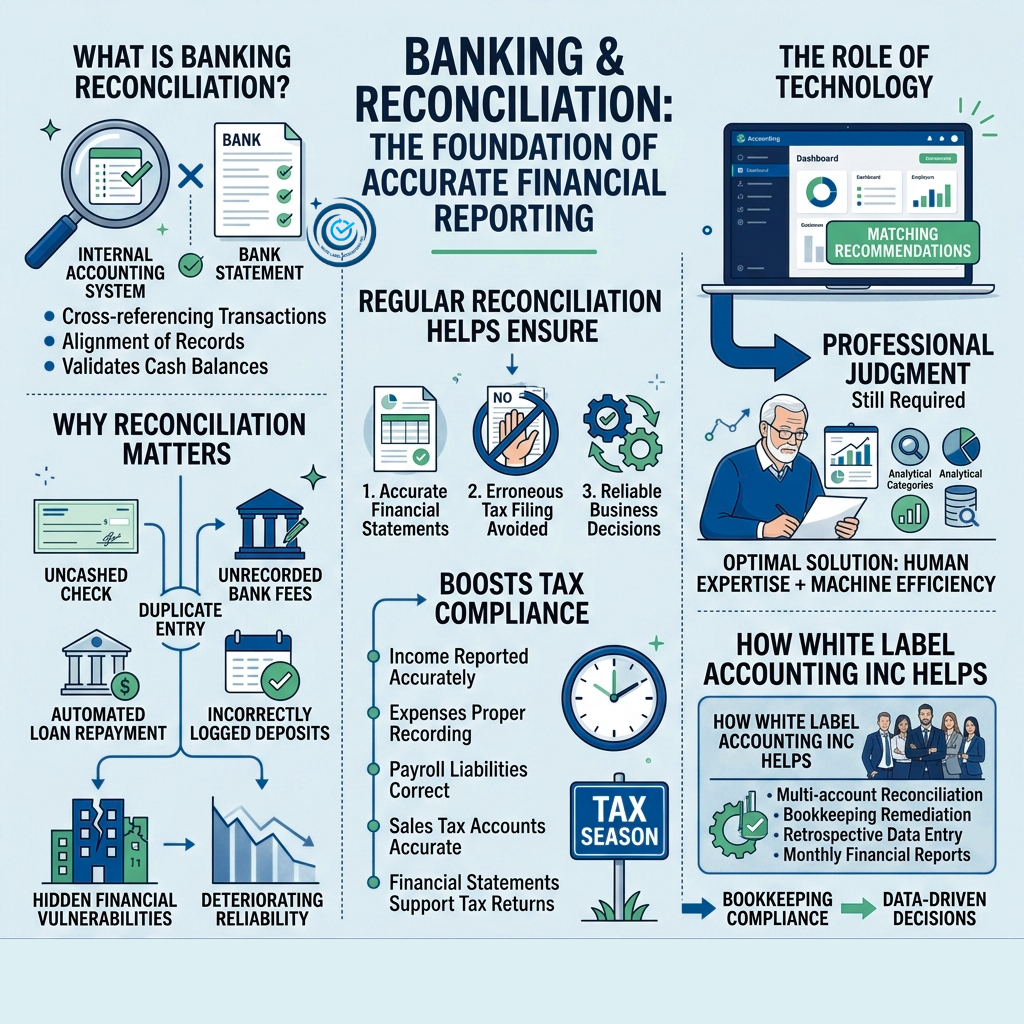
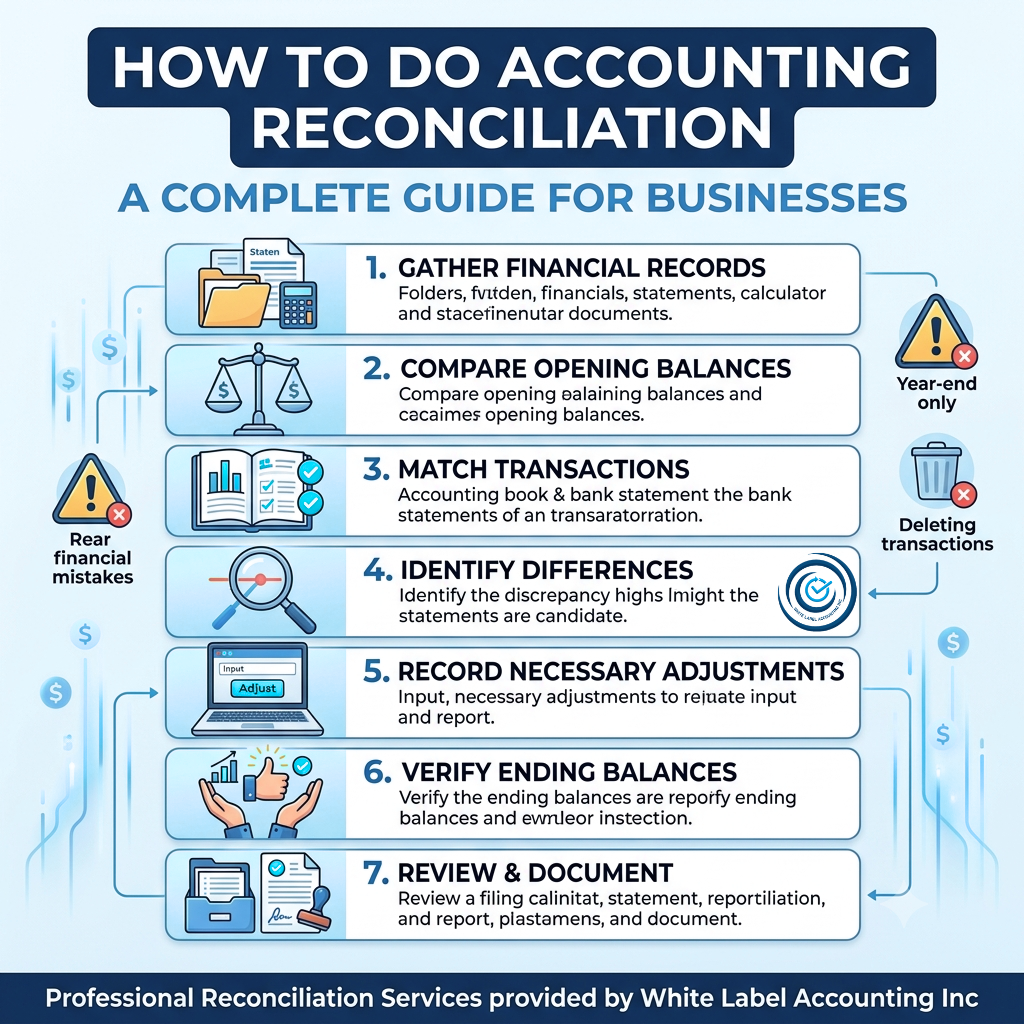
Financial reconciliation is the process of comparing internal financial records with external statements — such as bank accounts, credit cards, payment gateways, or vendor statements — to ensure everything matches accurately.
It answers one critical question:
Do your records reflect financial reality?
If not, reconciliation helps you find out why.
Errors happen. Manual entry mistakes, duplicate transactions, missed invoices — they’re common in growing businesses.
Without regular reconciliation:
Small discrepancies go unnoticed
Financial reports become unreliable
Budgeting decisions become flawed
Tax filings may contain inaccuracies
Routine reconciliation identifies issues early, when they’re still manageable and inexpensive to fix.
Fraud rarely announces itself. It hides in overlooked transactions and unreviewed statements.
Regular reconciliation:
Detects unauthorized transactions
Flags unusual payment patterns
Enhances financial transparency
Reinforces accountability within teams
Strong reconciliation practices act as a built-in financial safeguard.
Strategic decisions rely on precise financial data. If your books aren’t reconciled, your reports aren’t reliable.
When reconciliation is done consistently:
Balance sheets reflect true positions
Cash flow statements are dependable
Profit margins are accurately calculated
Forecasting becomes more realistic
Clean data drives confident decision-making.
Cash flow is the pulse of any business. Reconciliation ensures you know exactly:
What has cleared
What is pending
What remains outstanding
What requires follow-up
This clarity helps prevent overdrafts, late payments, and unnecessary borrowing.
Nothing creates stress like scrambling during tax season or an audit.
Regular reconciliation:
Keeps documentation organized
Ensures reported income matches bank records
Reduces compliance risks
Speeds up audit processes
When records are consistently aligned, year-end reporting becomes seamless instead of stressful.
For accounting firms offering white label services, reconciliation plays an even bigger role.
Your clients expect:
Accuracy
Consistency
Professional reliability
Error-free reporting
At www.whitelabelaccounting.com, regular financial reconciliation ensures your firm delivers flawless financial data under your brand. We help accounting firms maintain credibility while scaling operations efficiently.
In white label partnerships, precision equals reputation.
Reconciliation is not just a financial task — it’s a discipline.
Monthly or weekly reconciliation:
Establishes consistent review cycles
Encourages structured record-keeping
Reduces last-minute financial chaos
Promotes proactive financial management
Disciplined businesses are resilient businesses.
Some businesses reconcile quarterly. Others only at year-end.
That’s risky.
The longer discrepancies sit unresolved, the harder they are to trace. Best practice recommends:
Weekly reconciliation for high-transaction businesses
Monthly reconciliation for standard operations
Daily monitoring for high-volume or e-commerce businesses
Consistency prevents compounding problems.
Managing reconciliation internally can be time-consuming. That’s where outsourcing becomes strategic.
With expert support, you gain:
Dedicated financial professionals
Advanced accounting tools
Streamlined reconciliation workflows
Scalable support as client volume grows
White label reconciliation services allow accounting firms to expand capacity without increasing overhead — while maintaining exceptional quality.
Regular financial reconciliation isn’t just about balancing books. It’s about:
Accuracy
Protection
Confidence
Sustainability
Businesses that reconcile consistently operate with clarity. Accounting firms that prioritize reconciliation build long-term trust.
In today’s competitive financial landscape, precision is power — and reconciliation is the process that protects it.




Copyright © 2025 White Label Accounting Inc. All Rights Reserved | Developed by WITH U Technology Pvt. Ltd.