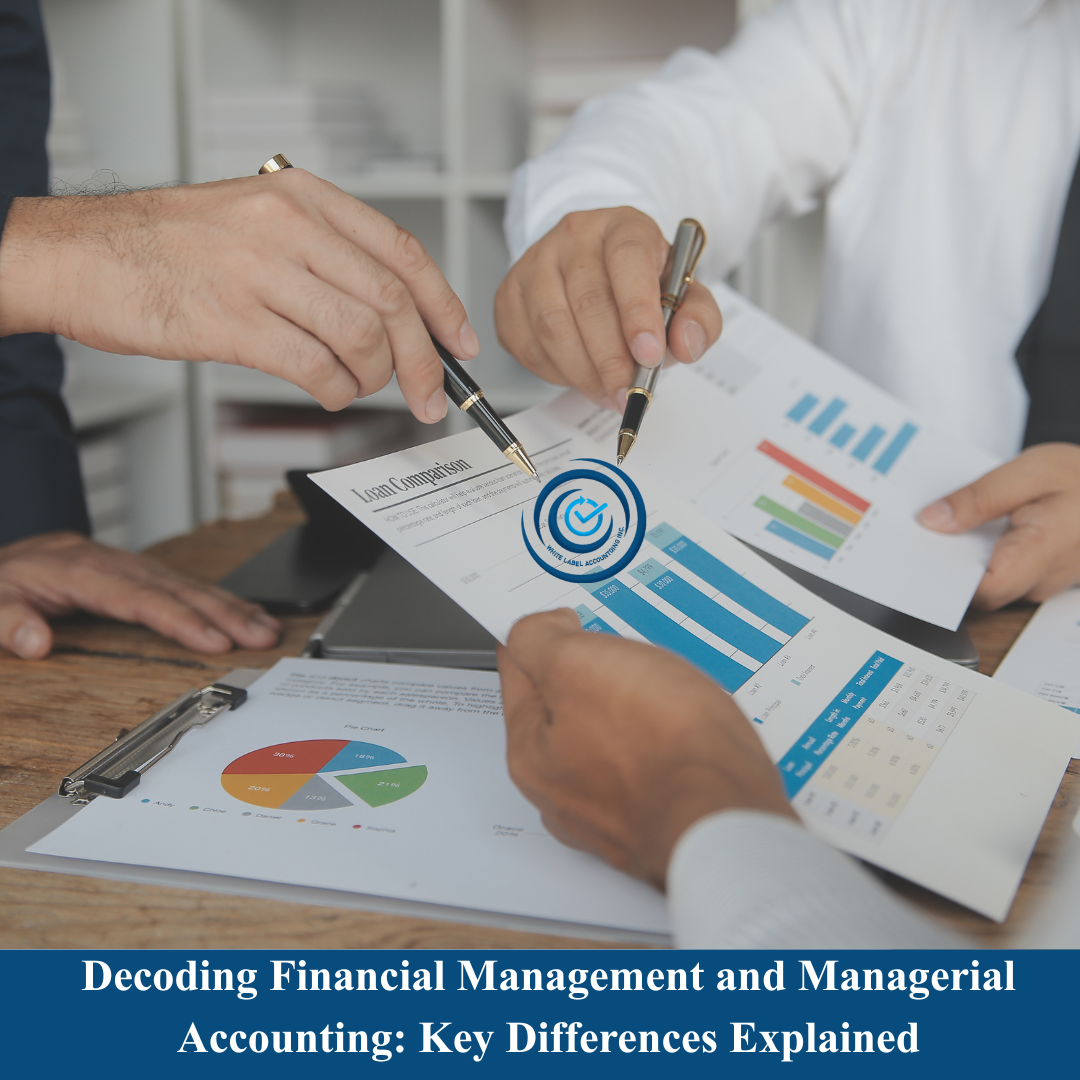
Understanding the distinction between financial management and managerial accounting is vital for building a financially strong and well-managed organization. While both functions influence business performance, each serves a unique purpose in shaping financial strategy and decision-making.
Financial management involves planning, organizing, directing, and controlling a company’s financial activities. Its primary goal is to maximize shareholder value by ensuring funds are used efficiently and strategically.
1. Capital Budgeting
Making informed investment decisions by allocating resources to high-return opportunities aligned with long-term strategic goals.
2. Working Capital Management
Ensuring the company maintains sufficient liquidity to meet its short-term obligations while optimizing cash flow.
3. Financial Planning
Forecasting financial performance, analyzing trends, and preparing financial strategies that support sustainable growth.
Managerial accounting focuses on providing internal decision-makers—such as executives, managers, and department heads—with financial insights needed to operate efficiently.
1. Budgeting
Preparing detailed budgets that lay out financial expectations and guide operational activities.
2. Cost Classification
Identifying and categorizing costs to support better pricing, budgeting, and cost-control decisions.
3. Performance Assessment
Analyzing the performance of departments, teams, and projects to enhance planning and efficiency.
Financial Management: Primarily for external stakeholders (investors, lenders).
Managerial Accounting: Used internally by management teams.
Financial Management: Emphasizes historical data, financial reporting, and compliance.
Managerial Accounting: Forward-looking, analytical, and designed to support business strategy.
Financial Management: Must follow standardized accounting principles.
Managerial Accounting: Flexible and customizable based on internal needs.
At White Label Accounting, we recognize the vital role financial management and managerial accounting play in your business’s success. Our comprehensive suite of services ensures your organization stays efficient, compliant, and financially strong.
Bookkeeping & Tax Services
Accurate, organized bookkeeping to keep your financial records current and compliant.
Payroll Management
Seamless payroll processing with full adherence to employment and tax regulations.
Sales Tax Compliance
Streamlined sales tax reporting and compliance for businesses of all sizes.
Software Migration Support
Smooth, secure transitions to new accounting systems without business disruption.
Management Reporting
Detailed financial insights to enhance decision-making and maintain compliance.
Expert Team: Skilled CPAs and bookkeeping specialists using the latest accounting tools.
Tailored Solutions: Customized strategies that match your unique business needs.
Compliance Assurance: Stay up-to-date with changing tax laws and regulations.
Scalable Services: Flexible support that grows with your business.
Take the Next Step
Ready to strengthen your financial management and managerial accounting processes?
White Label Accounting is here to help.
Email: info@whitelabelaccounting.com
Website: www.whitelabelaccounting.com
Financial Accounting vs. Managerial Accounting: What’s the Difference?
Financial Accounting vs. Managerial Accounting: What’s the Difference?
Difference Between Financial and Management Accounting


Copyright © 2025 White Label Accounting Inc. All Rights Reserved | Developed by WITH U Technology Pvt. Ltd.